
Tug Toys and Fetch Toys: Choosing Ones That Are Safe and Fun
By dogbowwow · Updated November 2, 2026
Disclosure: As an Amazon Associate we earn from qualifying purchases. This guide is educational and is not a substitute for advice from your veterinarian.
Tug and fetch look like two versions of the same game, but they ask very different things of a toy. Tug tests grip, stitching and the strength of a dog’s neck. Fetch tests flight, bounce and whether a ball is the right size for a throat. A toy that is fine for one can be a poor choice for the other.
Choosing the best tug toys for dogs is mostly about fit: your dog’s mouth, your hand, and the way the two of you actually play. The best fetch toys follow the same logic, with an extra focus on size, surface and the conditions where you play. This guide covers the house rules that keep both games safe, compares materials, and flags the dogs who should play differently or not at all.
Quick Answer
For tug, pick a toy with a firm grip, enough length to keep your hand away from teeth, and a material that suits your dog's mouth, then teach a reliable drop-it. For fetch, size the ball so it cannot lodge at the back of the throat, avoid hot-weather sessions, and limit jumping and sharp turns for puppies, seniors, and dogs with sore joints.
House Rules That Make Tug a Safe Game
Tug does not make a dog aggressive on its own, and for most dogs it is an excellent way to burn energy and strengthen a bond with a person. What matters is that it has rules, and the rules work only if the dog knows them.
Start and end the game on your terms. Offer the toy, wait for your dog to take it, and let a cue such as “take it” begin play. Keep the pulling steady and low, near the dog’s chest height, rather than yanking upward or whipping side to side. Jerky movement stresses the neck and spine, especially in puppies, long-backed dogs, and older dogs.
If teeth touch skin, the game pauses at once. Go still, put the toy down, and calmly resume only when your dog is settled. Over time dogs learn that gentle mouths keep the game going.
Let your dog win some rounds. A dog who never wins can become frustrated, while a dog who sometimes gets to carry the prize away stays eager. If you want a calm finish, trade the toy for a treat and then a short rest.
Teaching a Reliable Drop-It
Everything above depends on a dog who lets go. Teach it away from the game first.
- Hold a treat near your dog’s nose while they hold a low-value toy.
- When the mouth opens, say “drop it” and give the treat.
- Return the toy sometimes, so letting go does not mean losing the toy forever.
- Practice with higher-value toys, then try it during tug with a short pause.
If your dog freezes, growls, or gets tense when you reach for a toy, stop the game and bring in a trainer. The AVSAB behavior and humane-training position statements give general guidance, and a qualified trainer can look at your particular dog.
Rope, Fleece, or Rubber: Comparing Tug Toys
The right material depends on your dog’s age, the strength of their jaw, and whether the toy will also get chewed when the game is over.
| Toy type | Best for | Watch for |
|---|---|---|
| Rope | Playing with an owner; many dogs like the texture | Fraying; strands can be swallowed and cause gut trouble; not a chew toy |
| Braided fleece | Gentle mouths, puppies, dogs with sensitive teeth | Shredders can tear and eat it; replace when threads loosen |
| Rubber with handles | Strong grippers; easy for you to hold | Hard rubber can be heavy; check for cracks near the handles |
| Tennis or rubber ball on a rope | Combining chase with tug | Ball detaching from the rope; ball size relative to mouth |
| Large plush with sturdy seams | Soft-mouthed small dogs | Seam failure; stuffing and squeaker parts |
| Fire-hose or canvas style | Moderately strong chewers | Hard stitching or loose threads; rough fibers |
Whatever material you choose, set the toy aside when the game ends. A tug toy kept for the two of you stays interesting, and it does not become a chew toy that gets destroyed when no one is watching. Our guide on choosing toys for strong chewers covers what works for solo chewing.
Handles, Length, and Keeping Your Hands Safe
Dogs move fast when excited, and a missed grab can land on a knuckle. A longer toy means your hand stays farther from the teeth, and a toy with a loop or handle gives you something solid to hold. Look for stitching that is dense and even, and for handles that are sewn into the toy rather than glued.
Short toys suit tiny dogs, but even small dogs can bite fingers by accident. If children join in, supervise closely and have an adult manage drop-it and the end of the game. Small children and a keen tugger can be a difficult combination.
Who Should Skip Tug, or Play It Differently
Some dogs need an adjusted version.
- Teething puppies. Baby teeth are loose and gums are tender. Keep tug soft and brief, with a flexible toy, and never pull hard. See our guide to teething puppies for related toy choices.
- Dogs with neck, back, or jaw problems. Ask your veterinarian before playing.
- Dogs who guard objects. Tug may heighten tension. A trainer should assess this before you play.
- Dogs with very hard mouths. Teeth on skin, even in play, means a different game.
Fetch: Balls, Sizes, and the Tennis Ball Debate
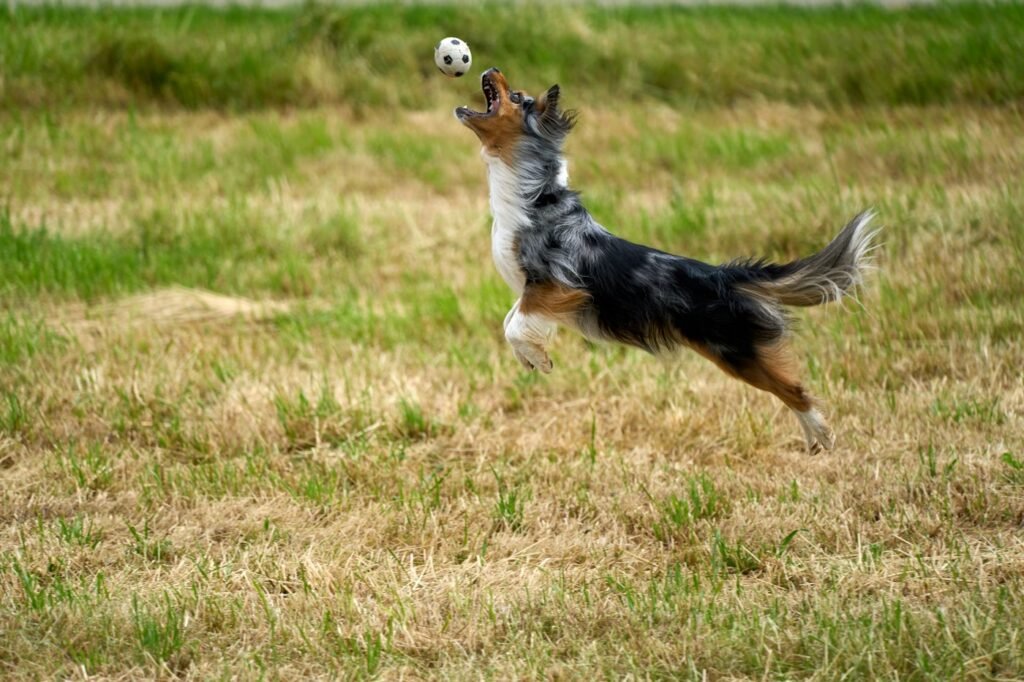
A ball that is too small can get lodged at the back of the throat, which is a medical emergency. The size should be judged by your dog, not by the label. A good rule is that the ball should be too big to slide back past the molars toward the throat. When in doubt, go a size up, and replace any ball that has been compressed or chewed down.
Tennis balls divide opinion. They are cheap, bouncy and available everywhere. Some veterinarians point out that the abrasive felt can wear down teeth in dogs who chew them a lot, and strong jaws can crush a tennis ball and split it. If your dog treats the ball as a chew toy, switch to a solid rubber fetch ball made for rough use. Throw sticks into the “not for fetch” pile altogether, since splinters and impact injuries are common.
Throw on soft ground where you can. Pavement is hard on joints and, on hot days, on paw pads.
Launchers and Discs: Reach Without Overdoing It
A ball launcher saves your shoulder and your hands, which become slobbery quickly. Choose a size to match your ball and check that the ball has not become too small for your dog while you were not looking. Launchers can send a ball farther than your dog may need, so keep throws moderate rather than at full distance.
Flying discs add an element of leaping and twisting that is tough on backs and knees. Pick a flexible disc, because rigid plastic can chip teeth and cut gums. Throw low and flat, so your dog runs rather than jumps, and avoid high catches. Many dogs enjoy a rolled-along-the-ground version just as much.
Advantages
- Fetch is easy to start, burns energy quickly, and requires no special skill from the owner.
- Fetch works well for dogs who love to chase and retrieve, especially with a launcher.
Drawbacks
- Fetch repeated dozens of times can strain joints and tendons, and risks overheating in warm weather.
- Tug is gentler on the joints but needs rules, a reliable drop-it, and a toy built for it.
Heat, Joints, and the Dog Who Never Quits
A dog obsessed with a ball will run until collapse if you let them, so you have to be the one to stop. Dogs cool by panting, which is far less efficient than sweating, and a long session in warm weather can lead to heatstroke. Flat-faced breeds, older dogs, overweight dogs and thick-coated dogs are especially vulnerable. Play early or late in the day, offer water, and rest in shade.
Signs of trouble include heavy or noisy panting that does not settle, thick drool, a bright red or pale tongue, wobbly legs and vomiting. Stop, move to a cool area, and call a veterinarian right away. The AVSAB behavior and humane-training position statements offer a starting point for learning what to look for.
Repeated sprinting and sudden stops also put stress on joints. Give puppies short sessions on soft ground, because their growing bodies are more fragile than they look. For older dogs and dogs with arthritis, swap fast chasing for slower games. Our guide to gentle toys and games for senior dogs has options.
Picture Three Play Styles
Picture a young Border Collie who will chase anything. She does best with a short fetch session, a rest, and then a scent game or a training round, so that the ball does not become the entire world. A schedule that mixes quick play and quiet work leaves her calm afterward instead of wired.
Picture a ten-year-old Springer Spaniel who still lights up at the sight of a ball. Keep throws short, avoid hard surfaces, stop while he is still enthusiastic, and watch how he moves the next morning. Stiffness is information.
Picture a small terrier who loves tug but has shaky manners. A short braided toy with a handle, clear start and stop cues, and a practice drop-it with treats can turn a rough game into a fun one.
Rainy Days and Indoor Versions
Tug travels well indoors, but fetch needs care. Slippery floors can cause falls, and stairs add risk. If you play indoors, use a soft toy, clear the area, and keep distances short. For more ideas, see indoor enrichment for rainy days. If your dog has too many options, a toy rotation plan keeps tug and fetch toys exciting.
Mistakes That Make Tug and Fetch Riskier
- Buying a ball by price. Size matters more than anything on the label.
- Pulling upward. Keep the pulling low and level.
- Letting the game run on. Excited dogs rarely quit on their own.
- Ignoring wear. Frayed rope, cracked rubber and a flattened ball belong in the trash; our toy inspection guide shows what to check.
- Playing in the heat. Choose cool hours.
- Leaving tug toys out. They are a shared game, not a solo chew.
Frequently Asked Questions
Does playing tug make a dog aggressive?
Not by itself. Tug with rules usually improves impulse control. If your dog growls over the toy, guards it or grabs hands, pause the game and ask a trainer for help.
How many fetch throws are too many?
There is no set number, because it depends on age, fitness, weather and surface. Stop while your dog is still keen rather than tired, and watch for panting that lingers or soreness the next day.
Are tennis balls safe?
They can be used for supervised fetch with dogs who do not chew them, but felt can wear teeth and a crushed ball can break apart. Dogs who chew them are better served by a solid rubber ball in an appropriate size.
Can puppies play tug?
Yes, gently and briefly, with a soft toy. Avoid hard pulls and lifting the puppy off the floor, and let teething be your guide to how much pressure is comfortable.
What is the best tug toy for a dog who shreds fabric?
Fabric toys will not last long for shredders. A rubber tug with a sturdy handle may suit better, but supervise in either case.
Can I use a stick if I have nothing else?
It is better not to. Sticks splinter, and a fast-running dog can be hurt by a stick that lodges in the mouth or throat.
Make the Game Short, Clear, and Yours
Start with one toy for tug and one ball sized to your dog’s mouth, keep sessions brief, and end them with a calm trade. After a week you will know whether your dog needs a different material, a slower pace, or an extra rest day.