
Dog Puzzle Toys: From Beginner to Brainiac
By dogbowwow · Updated November 2, 2026
Disclosure: As an Amazon Associate we earn from qualifying purchases. This guide is educational and is not a substitute for advice from your veterinarian.
Dog puzzle toys have an odd marketing problem: the packaging shows a delighted dog solving a six-step maze, while the reality in many homes is a dog flipping the thing over and walking off. The mismatch is almost always about difficulty. A puzzle that is a few notches too hard teaches a dog that the toy is annoying, and a puzzle that is much too easy is finished before you have set down the kibble scoop.
Getting dog puzzle toys right is mostly a matter of matching the mechanism to your dog’s current skill, then raising the bar gradually. This guide breaks puzzles into five tiers, shows how to teach a first puzzle in short sessions, and covers the practical details owners learn the messy way: calories, frustration signals, cleaning, and when to put one away.
Quick Answer
Start with the easiest puzzle toy your dog can solve in under a minute, then move up one difficulty tier at a time: roll-and-release, cups, sliders, rotating parts, then multi-step designs. Teach with a few visible treats, use part of the daily meal as the reward, and stop before frustration builds. Supervise every session, because plastic parts can be chewed off.
What a Puzzle Toy Asks Your Dog to Do
Strip away the plastic and every food puzzle asks for one of three things. The dog must move something (push, flip, slide, roll), find something (sniff out which compartment holds the food), or sequence something (do step A before step B can work). Different dogs find different asks natural.
A hound may be excited by the finding part and clumsy with the moving. A terrier may be happy to flip, nudge and paw anything. A calm older dog may like sliding panels but dislike anything that rattles. Noticing which skill your dog already shows in daily life is the quickest way to choose a first toy.
Puzzles also bring a gentler pace to mealtimes. Food that has to be worked for takes minutes instead of seconds, which is helpful for dogs who bolt dinner. If gulping is the main issue, our guide to slow feeder bowls compares simpler options, and puzzle toys can work alongside them for dogs who want more of a challenge.
Five Difficulty Tiers, Judged by Mechanics
Labels like “level 1” and “level 3” are not standardized, so judge a toy by its mechanics. This table groups common designs by what the dog has to figure out.
| Tier | Mechanics | Dog it suits |
|---|---|---|
| 1. Roll and release | Food falls out as the dog nudges or rolls a ball or wobbling shape | Beginners, puppies, dogs new to food toys, dogs who like to chase |
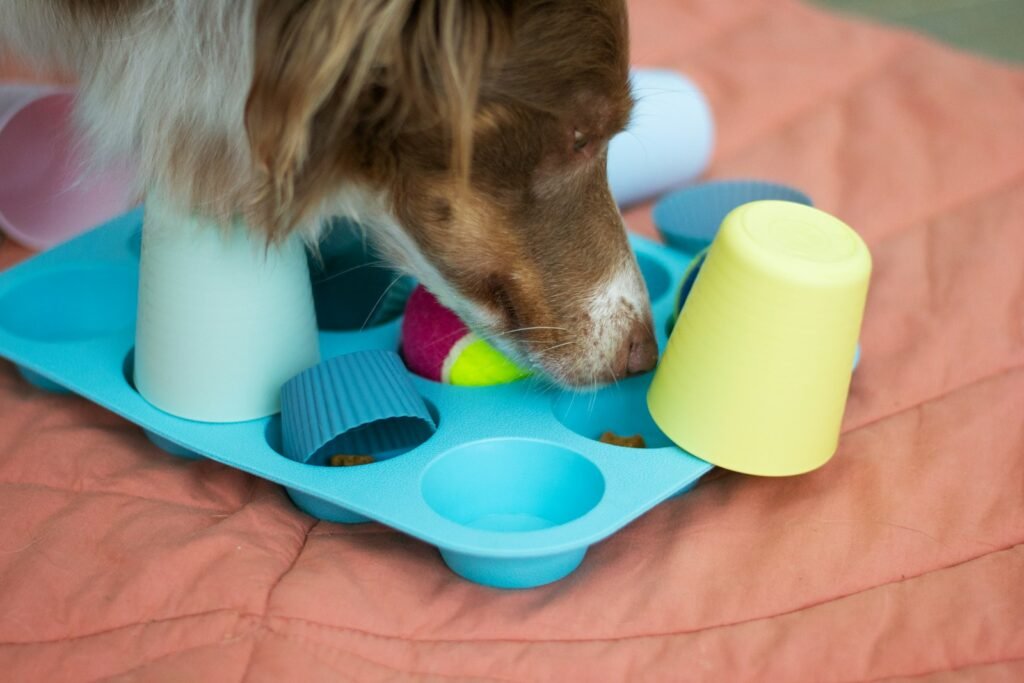
| 2. Lift the cup | Treats sit under open cups or lids that the nose can flip | Dogs who sniff and nudge naturally; confident first-timers |
| 3. Sliders | Panels slide along tracks with the nose or paw to reveal treats | Dogs who have mastered cups; those comfortable using paws |
| 4. Rotating and layered | Dials, spinning tiers, or levers must move before food is reachable | Experienced solvers who finish tier 3 in a minute or two |
| 5. Multi-step | A sequence such as slide, then lift, then rotate, sometimes with locks | Dogs who enjoy problem solving and have done several tier 4 toys |
A rough guide to judging progress: when your dog finishes a puzzle quickly and calmly three or four times in a row, the toy has become easy. Move up a tier. If the dog stops engaging before the food is gone, step down. The ladder is meant to be climbed slowly.
Teaching Your Dog Their First Puzzle
Dogs do not know a puzzle is a game until you show them the first win. Plan three short sessions of about five minutes each, in a quiet room without other pets nearby.
- Let them watch. Put a few high-value treats in the open compartments where they are easy to see and smell. Let your dog sniff the toy while you hold it still.
- Make the first solve almost free. Leave lids or cups loosened so a small nudge works. Praise the instant your dog gets a treat.
- Close the gap gradually. Over several sessions, set cups a little tighter or move a slider farther across. Keep each step small.
- Add the real food. Once your dog is solving confidently, swap to part of the normal meal.
Place the toy on a non-slip mat or against a wall so it does not skate across the floor. Do not push your dog’s nose into it or take over. The aim is for the dog to feel clever.
Using Meal Kibble Instead of Extra Treats
The easiest way to avoid weight gain from enrichment is to feed meals through the puzzle. Measure the day’s portion, set aside the part you want to use, and pour it into the toy. If your dog is eating less because of the puzzle, nothing is lost, and if the puzzle needs tastier bait to get started, add a few small treats and take that amount out of the bowl later.
Dry kibble that rattles easily works best in sliders and rotating toys. Wet or soft food suits compartments and cups that lick clean. Dogs on prescription or restricted diets should keep to the diet your veterinarian recommended, and that includes whatever goes in a puzzle. Flat-faced breeds and very small dogs may find deep wells and narrow grooves hard to reach, so a shallower layout will frustrate them less.
Reading Frustration Before It Turns Into Chewing
Watch for the signals that tell you a puzzle is too hard. Pawing and then walking away, whining, barking at you, mouthing or biting at the plastic, picking the toy up and throwing it, and a fixed stare at a compartment the dog cannot open are all common.
A single signal is nothing. A cluster of them means it is time to help. Slide one panel to open it, let your dog collect the treat, and end the session on that win. Next time, use an easier setup.
Three Dogs, Three Different Next Steps
Picture a young beagle who eats dinner in under a minute and then searches the kitchen for crumbs. A roll-and-release toy at tier 1, loaded with the dinner kibble, turns the meal into a ten-minute job that matches her nose. She does not need anything complicated yet.
Now picture a border-collie-type who solves a cup toy in forty seconds and gives you a look. He has outgrown tier 2. A slider or a rotating puzzle is the next step, and you may want to rotate several puzzles through the week so none becomes routine. Our guide on how to rotate dog toys outlines a simple system.
Finally, picture a timid rescue who ignores her first puzzle and backs away when it clatters. For her, the fix is quieter and slower: set the toy on a rug to dampen noise, start with treats that sit in plain view, and sit near her without hovering. If she needs weeks to feel brave, that is normal.
Advantages
- Starting at the easiest tier builds confidence, prevents quitting and lets you see your dog's problem solving style.
- Starting at the easiest tier also means very little can go wrong, so it suits shy or older dogs.
Drawbacks
- Jumping up fast can be fun for clever dogs, but a lost session can teach a dog to avoid the toy.
- Staying too long at one tier wastes the toy, since dogs who finish in seconds are bored again right away.
Safety, Supervision, and Cleaning
Most puzzle toys are made of plastic or silicone, with lids, cups, or tiles that are meant to move. Those moving parts are the weak point. A dog who chews can pull off a piece and swallow it, so a puzzle is a supervised activity unless you are sure your dog never chews it. If a part cracks or goes missing, retire the toy; our inspection guide goes through what to check on each material.
Cleaning matters because food residue hides in the grooves. Rinse the toy after each use, wash with warm, soapy water, and use a small bottle brush where needed. Some toys are dishwasher safe and others warp, so follow the label. Let everything dry fully before refilling, and keep wooden puzzles from soaking.
For ideas on using puzzles as part of a rainy-day routine alongside scent games and short training sessions, see our guide to indoor enrichment for rainy days. A softer alternative with less hardware is a snuffle mat or lick mat, which suits dogs who dislike clattering toys.
Where Puzzle Sessions Go Wrong
- Choosing by looks. A multi-step maze may photograph well and still be too hard for your dog today.
- Adding treats on top of meals. Calories from enrichment still count. Use the meal.
- Leaving it out all day. A puzzle is most exciting when it appears, so offer it, then put it away.
- Doing it in a crowd. Two dogs working beside each other can lead to guarding. Separate them with a gate or a closed door.
- Rescuing too quickly. A little effort is the point. Step in when you see real frustration, not at the first pause.
- Forgetting to clean. Old food in the grooves can smell off and may attract insects.
When a Puzzle Is Not the Right Tool
Some dogs lose interest in food puzzles, and that can have reasons. A dog who is unwell, in pain, or anxious may not eat as usual, and a puzzle will not change that. A dog who suddenly refuses meals or treats she used to love should be checked by a veterinarian. For general dog behavior reading, the AVSAB behavior and humane-training position statements and ASPCA general dog care guidance both publish owner-friendly articles on enrichment and learning.
Frequently Asked Questions
How long should a puzzle session last?
Five to fifteen minutes works for most dogs. Dogs who are new to puzzles should stay near the short end. If your dog is still engaged, you can repeat later in the day instead of extending the session.
My dog solved the puzzle in seconds. What now?
Move up a tier, or make the same puzzle harder by tightening lids or using less obvious food. Keeping several puzzles in rotation also helps, since the novelty is part of the appeal.
Can puppies use puzzle toys?
Yes, starting with simple roll-and-release designs. Choose sizes that suit a small mouth, supervise closely, and expect them to try chewing the toy.
Are puzzle toys good for anxious dogs?
They can offer a calm activity, but they do not treat anxiety. A dog who is too worried to eat will ignore a puzzle. If your dog’s distress is intense or constant, a veterinarian can advise on next steps.
Can I leave a puzzle toy with my dog when I go out?
Only if you have watched your dog use it many times and it has never been chewed apart. Even then, treat it as a risk. Read our guide on leaving toys for dogs home alone before you decide.
What if my dog just breaks the puzzle?
Remove it and choose a sturdier style, such as a dense rubber stuffable toy. Not every dog will play the game the way the designer expected, and that is fine.
Start Smaller Than You Think
Pick one toy that your dog can win in the first minute, load it with tomorrow’s breakfast, and watch what happens. If your dog finishes smoothly, buy the next tier up. If the toy goes flying across the room, make it easier and try again after the weekend.