
Slow Feeder Bowls: Do They Really Help Dogs Who Eat Too Fast?
By · Updated November 2, 2026
Disclosure: As an Amazon Associate we earn from qualifying purchases. This guide is educational and is not a substitute for advice from your veterinarian.
Some dogs do not eat dinner so much as vacuum it. The bowl hits the floor, a cup of kibble disappears in under a minute, and ten minutes later there is a gurgle, a cough and a small pile of undigested food on the rug. If that sounds familiar, a slow feeder dog bowl is probably one of the first fixes you have come across.
It is a reasonable idea, and for many dogs it works. It is also easy to oversell. This guide looks at why dogs gulp, what a slower meal can realistically change, how the designs differ in ways that matter, what you can try for free, and the moments when fast eating is not a bowl problem at all.
Quick Answer
A slow feeder dog bowl uses ridges, mazes or obstacles to make a dog work for each mouthful, which usually stretches a thirty-second meal into several minutes. It can reduce gulping, gagging and regurgitation for many dogs. It is not a proven way to prevent bloat, and frequent vomiting or gulping that suddenly changes deserves a veterinary visit.
Why Some Dogs Inhale Their Dinner
Gulping usually has an ordinary explanation, and the cause shapes the fix.
Competition. Dogs who grew up in a litter, or who live with other dogs, often learn that food vanishes fast. Even a dog who now eats alone may keep the habit, eating as if someone will arrive to take the bowl.
Habit and temperament. Some dogs are simply enthusiastic. Rescue dogs who missed meals earlier in life often eat urgently for years afterward.
Hunger. A dog fed once a day, or fed well after the point they expected breakfast, may arrive at the bowl desperate. Splitting the same daily amount into two or three smaller meals sometimes calms the rush on its own. Ask your vet how many meals suit your dog’s age and size.
Boredom and breed tendencies. Retrievers and some hound and terrier types are famously food motivated. For them, a bowl is not a meal but an event.
One more cause is worth knowing about. A sudden increase in appetite, particularly alongside weight loss or increased thirst, can have a medical explanation. That is a question for your veterinarian rather than a bowl.
What Gulping Can Cause
Fast eating itself is not always a problem. Plenty of dogs gulp and never have an issue. But for some, the speed shows up in predictable ways.
- Gagging or coughing as large mouthfuls hit the back of the throat.
- Regurgitation, where food comes back up soon after eating, often looking undigested and shaped like the throat. This differs from vomiting, which involves retching and partly digested food.
- Swallowed air, which can lead to burping or gassy discomfort after a meal.
- Choking risk, especially with large kibble, treats or chunks of food that are swallowed whole.
Slowing the meal gives chewing, swallowing and breathing a chance to keep pace with each other. That is the entire logic of a slow feeder, and it is a sensible one.
What a Slow Feeder Can and Cannot Do
Here is the honest summary. A slow feeder makes eating harder, so the meal takes longer. For many dogs, that means fewer gulped mouthfuls and less regurgitation. Owners often report that the dog also seems more settled afterward, because working for dinner is mildly satisfying.
What it cannot do is fix an underlying problem, and it has no proven record as a bloat preventer. Bloat, more formally gastric dilatation-volvulus or GDV, is a life-threatening emergency in which the stomach swells and can twist. Risk factors include being a large, deep-chested breed and other things that are still debated. Eating speed has been discussed as a factor, but a slow feeder has not been shown to prevent it.
Maze, Ridged, Suction and Lick Designs Compared
Not all slow feeders slow a dog the same way. The shape of the obstacle matters, and so does the dog’s face and mouth.
| Design | How it slows the meal | Best suited to | Possible drawbacks |
|---|---|---|---|
| Maze or channel bowl | Kibble sits in winding grooves the dog must nose through | Medium to large dogs with longer muzzles | Narrow grooves frustrate flat-faced dogs; deep channels are harder to scrub |
| Raised-pegs or dome center | Obstacles in the middle force the dog to eat around them | Dogs who tilt and scoop | Some dogs flip or carry the bowl |
| Shallow ridged plate | Low ridges slow the pickup without trapping food | Flat-faced breeds, small dogs | Less effective for very persistent eaters |
| Suction-base or sticky feeder | Holds the dish in place on a smooth surface | Dogs who push the bowl across the floor | Needs a clean, flat surface to grip |
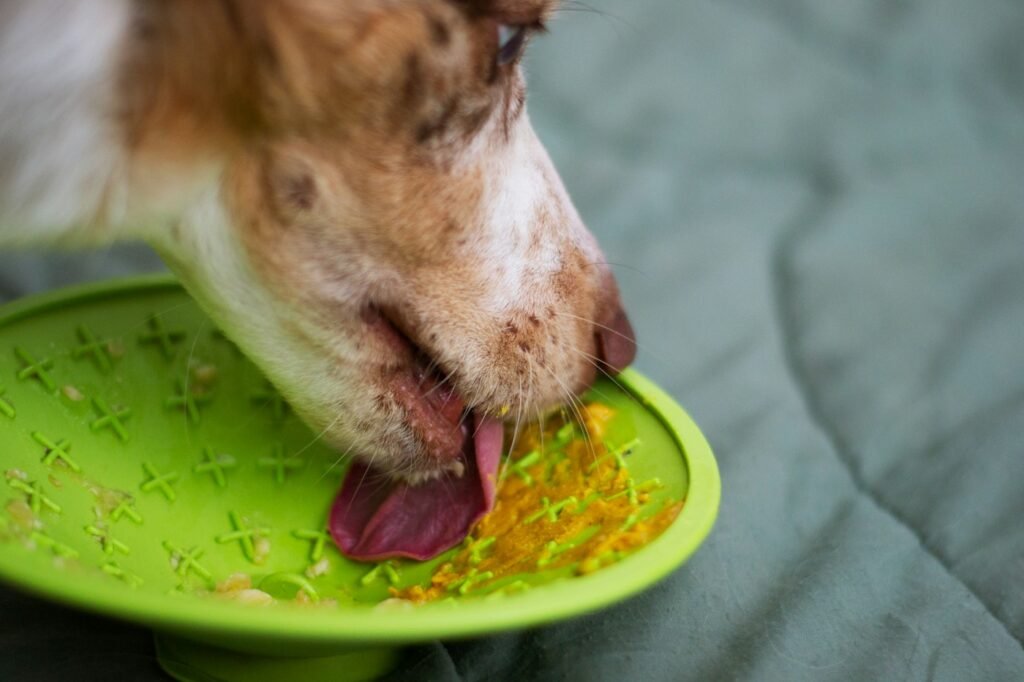
| Lick-style or snuffle mat | Food hides in textured material | Dogs who enjoy sniffing and licking | Fabric needs thorough washing; chewers may shred it |
Advantages
- Slow feeders can stretch a meal from seconds to minutes, which many dogs seem to enjoy.
- Slow feeders are inexpensive and easy to try before you commit to anything more complicated.
Drawbacks
- Hard, textured plastic can frustrate some dogs or wear against teeth if they chew or scrape at it.
- Deep grooves can trap food and make cleaning more work.
- No design replaces proper vet advice for dogs who vomit or regurgitate often.
Frustration, Teeth and Flat Faces
A good slow feeder should make eating a little harder, not impossible. If your dog gives up, flips the bowl, or tries to chew it, the setup is too challenging. Move to a simpler pattern rather than forcing the issue.
Hard plastic and teeth deserve a mention. Some dogs paw, scrape or bite at the ridges, and over time that could wear teeth or damage the bowl. If you see your dog gnawing the bowl instead of eating from it, switch to a softer or smoother design, or to one of the alternatives below. Our comparison of bowl materials explains which hold up best to teeth.
Flat-faced breeds need particular care. Dogs with short muzzles, such as bulldogs and pugs, may struggle to reach food in deep grooves and can end up swallowing more air or giving up on the meal. A shallow, wide ridged plate is usually kinder to them than a tall maze.
Slowing Dinner Without Buying Anything
You do not need a special bowl to make eating slower. Several household tricks do the same job.
- Muffin tin. Put a small portion in each cup so the dog has to work from one cup to the next.
- Scatter feeding. Spread kibble across a clean floor, a baking sheet or a lawn. Sniffing out each piece takes time and uses the dog’s brain.
- A large ball in the bowl. A ball too big to swallow, and too large to fit in the dog’s mouth, forces the dog to work around it. Choose a size that cannot be picked up or choked on, and supervise.
- Smaller, more frequent meals. The same daily amount split into two or three meals may be enough to calm the gulp.
- Puzzle toys and mats. Meals dispensed through a toy or hidden in a mat turn eating into a game; see our guides to snuffle and lick mats and dog puzzle toys.
Picture a two-year-old Labrador who finishes breakfast in twenty seconds and then follows his owner around the kitchen, still hungry and a bit gassy. The owner splits the meal in two, scatters the morning portion across a rubber mat and keeps the evening portion in a maze bowl. Breakfast now takes five minutes, and the afternoon regurgitation stops. The change came from combining small shifts rather than relying on one product.
When Eating Fast Is Really a Vet Question
Some patterns are not about speed at all. Call your veterinarian if your dog:
- Vomits or regurgitates regularly, or does so after nearly every meal.
- Coughs, gags or seems to struggle to swallow.
- Has changed suddenly, such as starting to gulp when they never did before.
- Is losing weight, or seems ravenous in a way that does not fit a normal routine.
- Seems uncomfortable or lethargic after eating.
None of these can be solved by a different bowl, and a slow feeder could mask a problem that needs treatment. For reliable background on digestive issues, the ASPCA general dog care guidance and the FDA guidance on safe pet-food handling are good places to read further, though neither replaces an exam.
Feeding Multiple Dogs
If you have more than one dog, competition can drive the gulping. Feed each dog in a separate room or at opposite ends of the house, and pick up bowls when they finish. A dog who knows no one will approach often eats more calmly even with an ordinary bowl.
Setup Mistakes That Make Slow Feeders Backfire
The most common problems are about match and maintenance, not the idea itself.
- Choosing too complicated a pattern. A dog who cannot reach the food becomes frustrated and may stop eating. Start with a simple design and move up.
- Ignoring muzzle shape. Deep channels suit long muzzles. Short-faced dogs often need shallow ridges.
- Skipping the scrub. Ridges and crevices trap residue. Wash the bowl daily and use a bottle or small brush for grooves; our guide on how to clean dog bowls covers the routine.
- Letting dogs eat together. Two dogs at two slow feeders side by side can still compete.
- Treating the bowl as the cure. If the dog is gulping because of stress, hunger or a medical issue, a new bowl will only hide it.
- Raising the bowl without asking. Elevated feeders are discussed separately in our review of elevated dog bowls; do not add one to a slow feeder without checking with your veterinarian, particularly for large breeds.
Frequently Asked Questions
How long should a meal take with a slow feeder?
There is no official target. Many owners see a meal stretch from under a minute to a few minutes. If it takes much longer or your dog abandons it, the design is probably too hard.
Can a slow feeder prevent bloat?
No. It has not been shown to prevent bloat, and you should not rely on it for that purpose. Talk to your veterinarian about risk and routines if you have a large or deep-chested dog.
Are slow feeders safe for puppies?
Generally yes, if the design is suitable for a small mouth and the puppy is supervised. Choose a simple, shallow pattern and watch that the puppy is actually getting enough to eat, since growing dogs have specific nutrition needs your vet can describe.
My dog flips the bowl. What now?
Try a suction-base design, place the bowl on a non-slip mat, or switch to scatter feeding or a muffin tin. Flipping often means the dog is frustrated or very motivated, so a simpler setup may help.
Can I use a slow feeder for wet food?
Some designs work with wet or soft food, and many are described as suitable for it. Smooth patterns are easier to clean after wet meals, so check the listing and avoid deep crevices that trap residue.
Is it better to use a puzzle toy or a slow feeder bowl?
They do different things. A bowl slows eating, while a puzzle toy adds mental work and can take the place of a meal. Some dogs enjoy both, rotated through the week.
A Two-Week Trial Before You Decide
Pick one change and run it for two weeks: a simple ridged bowl, a muffin tin, or a meal split in two. Note how long dinner takes and whether the gagging or regurgitation eases. If it does not, or if anything on the vet list above shows up, book an appointment instead of buying a harder bowl.