
No-Spill Dog Bowls and Feeding Mats for Messy Drinkers
By dogbowwow · Updated November 2, 2026
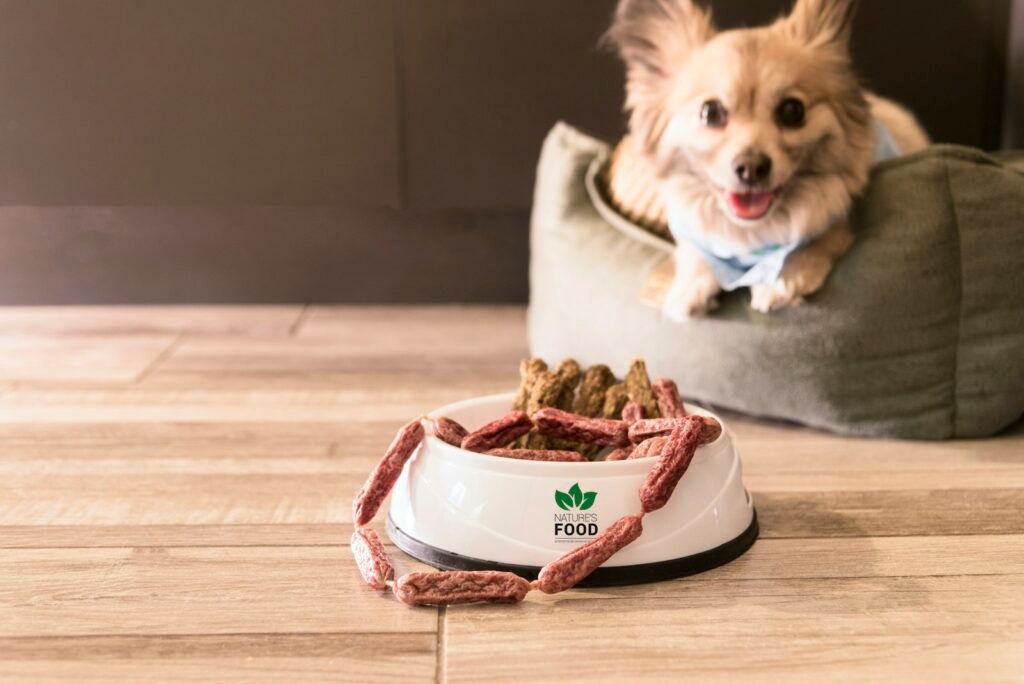
Disclosure: As an Amazon Associate we earn from qualifying purchases. This guide is educational and is not a substitute for advice from your veterinarian.
The trail starts at the water bowl and ends at the couch: a line of drops, a damp patch of beard, a puddle where the paws stopped to shake. Some dogs drink like a gentle sip from a cup. Others treat the bowl like a swimming pool and the kitchen floor pays for it.
A no spill dog water bowl is the obvious fix, and it helps with some kinds of mess and not others. This guide explains why dogs drip and splash, how each approach works, where it falls short, and how to protect your floors without ever cutting back what your dog can drink.
Quick Answer
A no spill dog water bowl reduces splashing, but it cannot stop a dog from dribbling after a drink. Floating disks slow fast drinkers, narrow or drip-catch designs trap some water, and heavy bases stop tipping. For the rest, add a silicone mat with a raised lip. Never solve a mess by limiting your dog's access to water.
Why Some Dogs Drip, Dunk and Splash
Different messes have different causes, so it helps to watch what actually happens.
- The dribble walk. The dog drinks, lifts the head and walks away, leaving a trail of drops from the muzzle. Dogs with loose lips and heavy jowls, such as mastiffs, bloodhounds and bulldogs, do this most.
- The scoop and fling. Some dogs curl the tongue and flick water forward and sideways. Big, fast drinkers can empty a quarter of the bowl onto the floor.
- The pawing habit. Some dogs paw at the water, either to play or to stir it. Puppies and young, bored dogs are especially likely to.
- The shove. Dogs who push the bowl around while drinking spill it by moving it.
- The summer plunge. In hot weather, some dogs step in, stand in or lie in the bowl.
- The post-drink shake. Dogs with long beards or ears carry wet fur that sprays water as soon as they shake.
Only the first and last of these are about wet fur. The others are about bowl behavior, and a bowl can change behavior.
How the Main Designs Work
Before choosing, compare what each approach does and does not do.
| Approach | How it works | Helps with | Limits |
|---|---|---|---|
| Floating disk | A disk sits on the water; the dog must push it down to drink | Fast drinkers who gulp and splash | Some dogs refuse it; not ideal for all faces |
| Narrow-opening or drip-catch bowl | A wide outer rim and an inner reservoir catch drips | Dribbling and some splash | Muzzle must fit; harder for flat faces |
| Weighted or wide-base bowl | Heavy or wide base resists tipping and shoving | Pushing, pawing, bowl-moving | Does nothing for dribbles |
| Silicone mat with raised lip | Catches water around the bowl | Splashes, dribbles, paw spills | Can be moved or chewed; needs washing |
| Tray or feeding station | Bowls sit in a shallow tray | Splashes and food crumbs | Bulkier; wipe regularly |
| Fountain | Water flows continuously | Dogs who ignore still water | Splash, noise and cleaning; see our fountain guide |
If you are not sure which cause applies, a mat plus a heavier bowl solves the greatest number of problems for the least effort.
Floating Disks: Slower Drinking, With a Learning Curve
A floating disk is the best-known no-spill trick. The disk sits just under the dog’s nose, so the dog has to nudge it and sip around it, which reduces gulping and slows the stream of water leaving the bowl. For gulpers who inhale water and cough, that can help.
It is not suited to every dog. Some will not use it at all. Flat-faced dogs can struggle to reach water around the disk, and dogs with sore necks or mouths may find it awkward. A dog who cannot or will not drink from it is a dog not drinking enough, which is a far bigger problem than a wet floor.
If you try one, introduce it gradually. Leave a regular bowl out as well for the first few days, and watch to confirm that your dog actually drinks from the disk bowl. If your dog hesitates, give up on the disk and move to a different fix. Our guide to bowl size and shape can help you pick a design that suits your dog’s face.
What No-Spill Bowls Cannot Fix
No bowl design eliminates jowl drip. Water caught in a dog’s lips and beard will drip when the head lifts, whatever bowl it came from. If your dog has loose lips, a catch tray or mat under the bowl and a towel nearby will help far more than a clever bowl.
Likewise, a bowl cannot cure a dog who plays in the water. For that, you need to change behavior, offer other outlets and keep the water bowl out of the splash zone. In summer, a shallow paddling pool outdoors gives a water-lover a better place to stand than the kitchen bowl.
Mats With Raised Lips
A silicone mat with a raised edge is one of the simplest improvements. Water that escapes the bowl hits the mat, not the floor, and the raised lip holds it in place until you wipe it away.
Check a few details before choosing:
- Size. The mat should be wider than the bowl by enough to catch a dog’s dribble and paw splash, not just the bowl’s footprint.
- Lip height. A higher lip holds more water, but a very tall one is awkward for small dogs to step over.
- Grip. A non-slip underside keeps it in place on tile. Test it with a wet floor.
- Material. Silicone wipes clean and dries quickly. A dog who chews will shred it, so watch for chewed edges.
- Washing. Water and food residue collect under mats. Lift it and wash both surfaces regularly; see our guide on how to clean dog bowls for a routine.
Mats work best with a heavy bowl, since a light bowl can slide off the mat and defeat the purpose. Our comparison of bowl materials discusses weight and grip.
Feeding Stations and Trays
A feeding station groups the food and water bowls on a single tray or frame, which keeps spills in one contained area and makes the feeding spot tidy. Some stations have raised edges, built-in cutouts and a place for a scoop.
They suit households with tile floors and a dog who flicks food as well as water. They do take up more space, and the tray needs emptying and washing. Check that the bowl cutouts fit your dog’s bowls and that the tray is not so wide that it is a trip hazard.
Protecting the Floor Underneath
Water on a hard floor is more than a mess. Standing water can seep into the seams of laminate and engineered wood, stain grout and, over time, damage wood floors. Be especially careful with a bowl that stays in the same place for years.
- Wipe the area every day, including under the mat.
- Keep the bowl on tile, vinyl or another water-tolerant surface where possible.
- Avoid placing it next to a baseboard, where drips collect unseen.
- Lift the mat once a week to check for moisture underneath.
- Keep a dedicated drying towel by the bowl for beards and jowls.
Where to Put the Bowl
Placement is free and often effective. A corner limits the angles from which a dog can splash, and a spot beside a hard-floored entry means wet paws and muzzles dry before the dog heads for the carpet. Keep the bowl away from upholstery, rugs and electronics.
Choose a spot your dog can reach easily at all times, including a senior dog who may not want to walk far. If you have a fountain, remember that its cord and splash need their own plan; see our look at dog water fountains.
Advantages
- No-spill bowls reduce splashing and gulping with little effort.
- Mats and trays catch what escapes any bowl, and wash easily.
- Heavier bowls stop sliding and tipping.
Drawbacks
- Floating disks can put some dogs off drinking and do not suit all faces.
- Mats and trays need regular lifting and washing to avoid hidden mess.
- No design stops a jowly dog from dripping after a drink.
Three Messy Drinkers
Picture a one-year-old Great Dane who drinks like a pump, leaving a thick trail of drops from kitchen to hall. Her owner swaps the small bowl for a wide, heavy one, adds a large mat with a raised lip and keeps a towel by the door. The trail shrinks to a few drops.
Picture a young retriever who paws the water every time he drinks. A weighted bowl in a corner stops the sliding, a shallow outdoor water dish gives him a place to play, and the indoor floor stays dry.
Picture a bulldog with heavy jowls and a bit of a snort. A floating disk makes it hard for him to reach the water, so the owner drops it and instead uses a wide bowl with a mat and wipes his jowls with a towel after each drink.
Spill-Control Mistakes to Avoid
- Buying a bowl before watching the mess. Work out whether it is dribbles, splash or pushing first.
- Choosing a lightweight mat that slides. Test grip on your actual floor.
- Forgetting cleaning. Water bowls and mats develop film quickly; wash them often.
- Overfilling. A bowl filled to the brim spills even with a clever design.
- Leaving no backup. If your dog refuses the new bowl, offer a regular one as well.
- Ignoring comfort. A bowl that is too small, too deep or too awkward pushes dogs to drink less.
For general information about keeping dogs healthy and hydrated, the FDA guidance on safe pet-food handling and the FDA guidance on safe pet-food handling are good references.
Frequently Asked Questions
Do no-spill bowls really work?
They work on certain kinds of mess, such as splashing and gulping, and they do not cure jowl drip. Matching the design to the cause gives better results than relying on any single product.
Will my dog get used to a floating disk?
Many do, with patience, but some never do. Introduce it slowly, keep a plain bowl available, and stop if your dog is drinking less.
Is a mat better than a no-spill bowl?
They solve different problems. A mat catches what leaves the bowl; a no-spill bowl reduces what leaves it. Many owners use both.
How big should a feeding mat be?
Large enough to catch your dog’s splash zone, not just the bowl. A good test is to watch where drops land during a few drinks and size the mat to cover that area.
What if my dog chews the mat?
Remove it and try a sturdier material or place the bowl in a tray instead. Check for torn or swallowed pieces, and contact your vet if you think your dog has eaten any.
Should I raise the bowl to cut spills?
Raising a bowl does not target spills, and it carries other considerations, especially for large, deep-chested dogs. Read our review of elevated dog bowls and ask your vet first.
Start With the Cheapest Fix
A wide mat under a heavy bowl handles most of the mess for the least money, so try that first. Add a floating disk or a drip-catch bowl only if the splashing or gulping continues, and keep a towel by the bowl for the drips no design can stop.