
Front-Clip vs. Back-Clip Harnesses: Which Is Better for Pulling?
By · Updated November 2, 2026
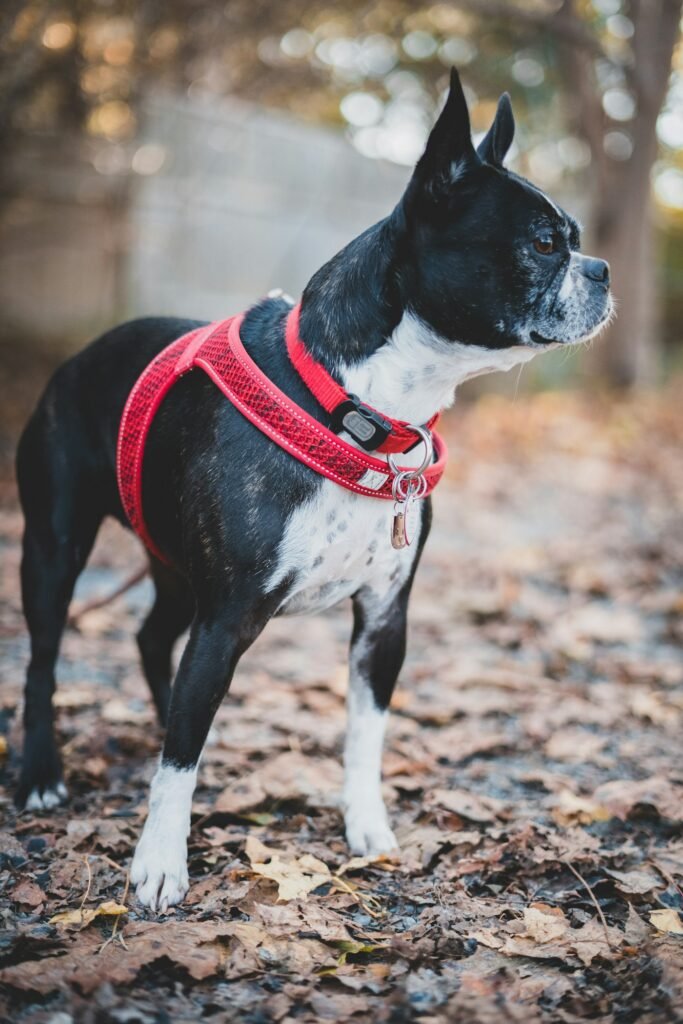
Disclosure: As an Amazon Associate we earn from qualifying purchases. This guide is educational and is not a substitute for advice from your veterinarian.
Two dogs of the same size walk down the same sidewalk. One is clipped at the back and leans into the leash like a sled dog, shoulders low, nails scrabbling. The other is clipped at the chest and, every time they surge forward, gets gently swung sideways toward their owner. Same dog, same street, different ring.
The front clip vs back clip harness question is really a question about leverage: where on the body the leash pulls, and what that does to the dog’s balance. Neither choice is right for every dog, and neither is a cure. This guide explains how each attachment works, where dual-clip designs fit, what some professionals say about shoulder movement, and what to do beyond buying gear.
Quick Answer
A front clip steers your dog's chest toward you when they surge ahead, which gives you more control over a puller. A back clip is comfortable and simple but lets a strong dog lean into the pull. Dual-clip harnesses let you use either. No attachment point removes pulling by itself; loose-leash training does that work.
Where the Leash Pulls Is Where the Dog Turns
Think about what happens when you tug a shopping cart by its back versus by its front wheel. Pull from behind and it keeps rolling forward. Pull from the front and it swings around.
A dog harness behaves similarly. With a back clip, the leash attaches between the shoulder blades. When the dog surges forward, the tension pulls straight backward along the spine. Many trainers explain this as the opposition reflex, a tendency to lean into pressure. It is a useful rule of thumb rather than settled science, but a back ring does give a strong dog something to lean against, which is why a strong dog on a back-clip harness can seem to pull even more.
With a front clip, the leash attaches on the chest, near the breastbone. When the dog surges, the tension pulls the chest off line and pivots the dog toward you. They cannot easily lean into it, because the pull turns them rather than stopping them. For a dog who has learned that forward equals progress, this change in outcome can make the first lessons far easier.
Attachment Points Compared
Not every harness has the same set of rings, and the labels can be confusing. This table separates the common arrangements.
| Attachment | How it steers | Suits | Limits |
|---|---|---|---|
| Back ring only | Pulls straight back along the spine; little steering | Calm walkers, small dogs, dogs already trained to walk loosely | Gives a strong puller something to lean against |
| Front ring only | Turns the dog sideways when they surge | Moderate to strong pullers during training | Leash can tangle around the legs; some dogs hate the feel |
| Dual (front and back) | You choose per walk, or use both with a double-ended leash | Households that want flexibility; dogs whose behavior varies | More hardware, more to learn, and more places to fit poorly |
| Side rings | Steering from the sides of the chest or ribcage | Dogs that need gentle guidance; some trainers use them with a double-ended leash | Not common on mass-market designs; check that rings do not twist the harness |
If you are unsure which describes your harness, hold the leash on each ring and gently lean back. Notice where your dog is pulled and whether the harness stays put.
When the Front Clip Earns Its Place
A front ring is most useful during the learning phase of loose-leash walking. If your dog is large, determined, or easily excited, the turning effect gives you control without a fight, and it takes a lot of strain off your shoulder and your dog’s neck compared with a collar.
It is not free of drawbacks, though. The leash hangs low and can pass under the dog’s front legs or between them, especially if your dog zigzags. Some dogs step over the line and get tripped up. Others find the chest pressure unpleasant and respond by freezing or pawing at the harness. If your dog is hesitant, desensitize them to the feel before relying on it.
Fit matters here more than anywhere. A front-clip harness that is too loose lets the chest strap shift sideways, so the leash ends up on the shoulder instead of the center of the chest. Our guide on how to measure and fit a dog harness walks through the checks that keep the ring where it should be.
When a Back Clip Is the Better Choice
For a dog who already walks politely, the back clip is calm and uncomplicated. The leash stays out of the way of the legs, and the harness spreads pressure across the chest and back rather than the throat. For small dogs, which tend to have little leverage to begin with, a back ring is usually fine.
It also suits dogs who tangle easily on a front clip, dogs who trot beside you on a jog and need a straight, steady line, and dogs whose owners are working mostly on training rather than gear.
The trade-off is that a strong dog can drive forward against a back clip. If you notice your dog’s front end lifting and the rest of the body leaning forward into the tension, the back ring is giving them an anchor.
Dual-Clip Designs and Double-Ended Leashes
A dual-clip harness has both rings, so you can switch depending on the walk. A quiet route might call for the back ring, while a busy street where a squirrel might appear calls for the front.
Some owners attach a double-ended leash to both rings at once, one clip at the chest and one at the back, and hold them as a single line. This spreads the load and gives a mild steering effect with less swinging. It does add a second clip to handle, so it takes practice to keep the leash from twisting into a knot at the middle.
Advantages
- Dual-clip harness lets you match the attachment to the walk, which helps while a dog is learning.
- Double-ended leash spreads the pull across two points and can reduce abrupt swings.
Drawbacks
- Dual-clip harness has more hardware to fit and more straps to inspect for wear.
- Double-ended leash adds extra clips to handle and can tangle until you are practiced with it.
What Some Professionals Say About Shoulders
Some canine fitness and rehabilitation professionals raise a concern about certain front-clip designs: straps that cross over the front of the shoulders could restrict the natural swing of the front legs, especially in athletic dogs that run, jump, or do agility. The evidence base on this is limited, and opinions vary, so it is better to treat it as a reason for careful observation than as a rule.
A few practical checks help. Choose a design where the chest strap sits across the breastbone rather than across the point of the shoulders, and where the straps fall in a Y or V shape that leaves the shoulder blades free. Then watch your dog trot toward and away from you. If the front legs swing normally, the stride is full, and there is no new stiffness after walks, the fit is probably fine. If you see shortened steps or sideways swinging, adjust or try another design. For an athletic dog or one with a joint problem, ask your veterinarian or a canine rehabilitation professional which styles suit that dog.
Handling Tricks That Reduce Tangles
A few habits make a front-clip harness far less annoying.
- Use a leash that is light enough to stay clear of the legs. A heavy chain or thick clip can drag under the chest.
- Keep your leash hand on the side where the dog walks, and let the slack form a gentle loop rather than a straight line to the ground.
- Walk in a gentle curve rather than straight when the dog tends to zigzag; it gives them a clear path.
- If the leash does go under a leg, stop calmly, step in, and lift it out instead of yanking.
Our guide to how to choose a dog leash covers length, weight, and clip types that work well with chest attachments.
A Harness Manages the Pulling, Training Changes It
It is tempting to treat the harness as the solution, especially when the product is labelled “no-pull.” That label is marketing. A harness changes what happens when your dog pulls, which can make training easier, but it does not teach the dog anything on its own. Dogs often pull again the moment the equipment changes, or on days they are overexcited.
What changes behavior is a consistent lesson: walking forward only while the leash is loose, stopping or turning when it tightens, and rewarding the dog for staying beside you. The AVSAB behavior and humane-training position statements give an accessible introduction to loose-leash skills, and the AVSAB behavior and humane-training position statements provides behavior resources that favor reward-based approaches.
Picture a three-year-old shepherd mix who pulls toward every dog on the walk. Switching to a front clip helps you turn her away from the distraction. The lasting change comes from practicing at lower-distraction places first, rewarding when she looks at you instead of lunging, and building up gradually. For a deeper comparison with other walking tools, see no-pull harness, head halter, or flat collar.
Missteps That Make a Front Clip Worse
- Using it as a punishment tool. Yanking the line to spin your dog around turns a gentle steer into a jolt. Guide, do not jerk.
- Skipping the fit check. A rotating, loose harness makes the front ring useless.
- Switching rings every few minutes. Dogs learn from consistency. Pick one setup per walk.
- Ignoring tangles. A dog who repeatedly trips on the leash may learn to dislike walks.
- Assuming a harness prevents escapes. Some dogs back out of any design; see our guide to escape-proof dog harnesses.
Frequently Asked Questions
Can I use a front clip and a back clip on the same walk?
Yes, with a double-ended leash that attaches to both rings, or by switching to the back ring when the dog is calm. Be consistent within a walk so the dog is not confused about what the pressure means.
Will a front-clip harness hurt my dog?
A well-fitted one should not. Check that the chest strap sits on the breastbone, the straps do not cut into the armpits, and the stride looks normal. If your dog seems uncomfortable, change the fit or the design.
Is a back clip bad for dogs with neck issues?
A back clip avoids pressure on the throat, which is why many veterinarians suggest harnesses over collars for dogs with neck or airway concerns. If your dog has a specific condition, your vet can advise on which design suits them.
Are front-clip harnesses suitable for small dogs?
They can be, but fit is trickier in small sizes, and a very small dog rarely generates the leverage that makes a front clip necessary. A well-fitted back clip is often enough.
How long will my dog need a front clip?
It depends on the dog and on how much training time you put in. Some dogs graduate to a back clip once they walk loosely at all times, while others stay on the front ring for life because it works for their person.
What if my dog still pulls in a front-clip harness?
Check the fit first, then look at your training plan. Walking in lower-distraction places, shortening sessions, and using higher-value rewards usually help. A certified trainer who uses reward-based methods can troubleshoot in person.
Pick One Ring and Practice
Choose the attachment that suits the dog you have today, fit it carefully, and then spend a week doing short, structured walks with plenty of rewards for a loose leash. If it works, you may be able to relax the equipment later. If not, you will at least know whether the harness or the training plan is the thing that needs to change.