
How to Measure and Fit a Dog Harness
By · Updated November 2, 2026
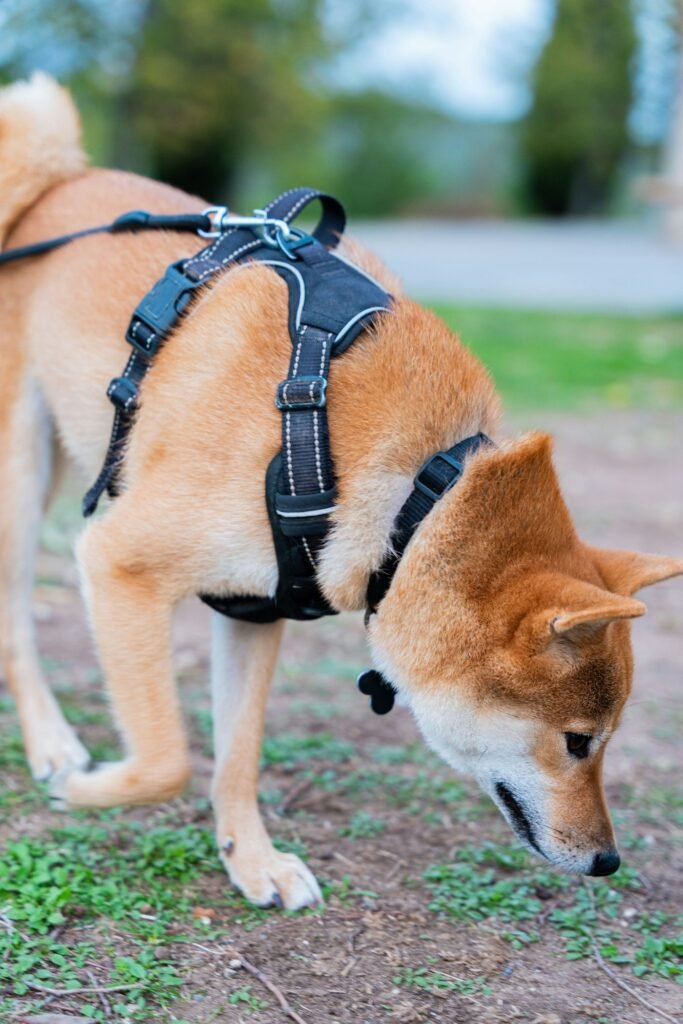
Disclosure: As an Amazon Associate we earn from qualifying purchases. This guide is educational and is not a substitute for advice from your veterinarian.
A harness can be the right size on paper and still be wrong on the dog. The weight range says “50 to 70 pounds,” your Lab mix weighs 58, and yet the chest strap sags, the whole thing swings to one side on walks, and there is a red patch of skin behind each front leg by the end of the week.
Knowing how to fit a dog harness is mostly a matter of two things: taking measurements that match what the product actually uses, and then checking the fit on a moving dog instead of a standing one. This guide covers both, plus a troubleshooting table for the most common fit problems, and the seasonal changes that quietly make a good fit go bad.
Quick Answer
Measure the widest part of your dog's chest just behind the front legs, then the neck where a collar sits, and note their weight. Pick the size whose range puts your numbers in the middle, not at the edge. Once it is on, you should fit two fingers under every strap, and your dog should walk, sit, and trot without the harness shifting or rubbing.
Three Measurements Worth Taking Before You Browse
You need a soft tape measure or a piece of string you can lay against a ruler. Ask your dog to stand square on all four feet, relaxed, and have a treat ready. A dog who is sitting, crouching, or sucking in their belly will give you a number that is too small.
Chest girth is the one that matters most. Wrap the tape around the deepest, widest part of the ribcage, just behind the front legs, passing over the back and under the chest. Keep it snug against the body without pressing into the coat. With thick fur, press lightly so the tape follows the ribcage, and note whether the coat is full or freshly trimmed.
Neck measurement goes where the harness neck opening will sit, which is lower than where a collar sits for many designs. Wrap the tape around the base of the neck, where it meets the shoulders. If the product has a fixed neck opening, this number decides whether the head will fit through at all.
Weight is a cross-check. Use a recent vet weight or a home scale reading. It is useful because it catches an obvious mistake, such as a chest number that does not match the dog you know.
Reading a Size Chart Without Trusting It Blindly
Charts are written by the manufacturer, for that manufacturer’s own harness. A “medium” in one design may cover a chest of 22 to 30 inches, while another design with the same label covers 18 to 26. Always compare your numbers with the ranges in inches or centimeters, not the size name.
Then look at where your dog falls inside the range. A harness is easiest to fit when your measurement lands in the middle of its adjustment range, because you have room to tighten or loosen as the coat, weight, or season changes. If your dog sits at the very top of a range, the strap will be maxed out and any weight gain means a replacement. If they sit at the very bottom, you will have a long tail of loose webbing to tuck away.
When your dog falls between two sizes, think about the shape of the harness. A design with several adjustment points can often work in the smaller size with everything loosened a little. A design with only one adjustable strap usually forces you to size up and accept a looser fit around the neck. Our guide to harnesses for small and flat-faced dogs goes deeper on the small-breed end of the chart, where a quarter inch really does matter.
A Fit Check You Can Do in Your Living Room
Put the harness on according to the instructions, adjust it so it feels roughly right, then work through these checks. Do them before the first walk, not after.
- Two fingers. Slide two flat fingers under the neck strap, the chest strap, and the belly strap. They should go in without force and without a big gap. If you can fit a fist, it is too loose. If you cannot fit two fingers, it is too tight.
- Chest plate position. The front of the harness should sit on the breastbone, the flat area between the front legs, not up against the throat. It should not ride up when you pull gently on the leash attachment.
- Shoulder freedom. Watch your dog walk toward you and away from you. The straps should not cross the shoulder blade in a way that makes the front legs swing inward or shorten their stride. Some trainers and canine rehabilitation professionals watch closely for this, so if your dog’s gait looks different in the harness than out of it, take that seriously.
- Behind the legs. The strap behind the front legs should sit clear of the armpit, with no pinched skin or bunched fur when the leg swings forward.
- Movement test. Have your dog sit, lie down, trot a few steps, and turn in a circle. The harness should not rotate, bunch, or slide forward.
- Tug test. Hold the leash attachment and give a gentle, steady pull in the direction the dog might pull. Check that nothing slips over the head or shoulders.
Picture a deep-chested dog with a narrow waist, like many sighthound mixes. The chest strap may sit correctly while the belly strap hangs loose, because the ribcage is so much bigger than the waist. For that shape, a harness with an independently adjustable belly strap matters more than a tidy weight range.
What Each Adjustment Point Actually Does
Understanding the straps makes it easier to correct a bad fit.
The neck strap controls how high the harness can ride and whether the head can pull back through. The chest or girth strap wraps behind the front legs and does most of the work of holding the harness in place. A separate belly strap, found on some designs, keeps the whole harness from rotating and shifts the load to the ribcage. A step-in design lets the dog place both front feet into loops, so you only need to fasten it across the back, while an over-the-head design slides on and buckles at the sides.
Advantages
- More adjustment points let you tune the fit around a difficult shape such as a deep chest, a thick neck, or a short back.
- Fewer, simpler straps are quick to put on a wriggly dog and have less webbing to rub.
Drawbacks
- More adjustment points also mean more places for straps to loosen, twist, or tangle during a walk.
- Fewer adjustment points can leave you stuck between sizes with no way to correct a poor fit.
Fit Problems, Their Causes, and Fixes
When something looks off, match the symptom in this table to a likely cause. These are common patterns, not diagnoses, and a persistent skin problem is a reason to call your veterinarian.
| What you notice | Likely cause | What to try |
|---|---|---|
| Rubbed or bald patches behind the front legs | Chest strap too tight or sitting too close to the armpit | Loosen it, move it back, and consider a design with padded straps |
| Harness twists to one side | Belly strap missing or loose, or the harness is too large | Tighten the belly strap or try a smaller size |
| Harness rides up toward the neck | Chest strap too loose or neck strap too long | Shorten the chest strap first, then check the neck |
| Front legs swing inward or stride looks short | Straps cross the shoulder blades | Try a design with a Y-shaped front that leaves the shoulders free |
| Large gap behind the front legs | Girth too loose | Tighten the girth strap and recheck the two-finger rule |
| Dog backs out when you pull | Neck opening too large, or harness too loose overall | Tighten all points; see our guide to escape-proof dog harnesses |
| Hair matting under the straps | Rubbing from loose or sandwiched straps | Brush the area daily and check that straps lie flat |
Coats, Seasons, and Weight Changes
A fit is not permanent. Recheck it every month or two, and any time your dog’s body changes noticeably.
Fluffy breeds are the classic example. A husky or a golden retriever in a thick winter coat will fill a harness differently than the same dog after a summer trim or a heavy spring shed. A harness adjusted over a fluffed-up coat can feel loose once the coat thins. If you groom your dog, fit the harness after grooming, not before.
Weight changes matter too. A dog who has gained or lost a few pounds over the winter may need an adjustment to the chest strap. And a dog who is losing muscle mass with age may have a different shape than they had two years ago, which is worth mentioning to your veterinarian if the change is quick.
For puppies, the harness is often outgrown in weeks. Check it every few days during growth spurts and favor a design with a wide adjustment range. Our guide to puppy collars, harnesses, and the first leash covers how to introduce gear to a young dog without making them dread it.
Common Fitting Mistakes
- Fitting a standing dog only. Many harnesses look fine when the dog is still and shift as soon as the dog moves. Do the walking and sitting checks.
- Using the neck measurement alone. The chest decides how a harness holds. A neck number tells you whether the head fits, not whether the harness stays put.
- Never rechecking. Fitting once and forgetting leads to rubbing and escape attempts months later.
- Leaving a harness on all day. Most designs are meant for walks and supervised wear. A harness left on indoors can rub, trap damp fur, and catch on furniture or crate bars.
Which Style Suits Which Walk
Once the fit is right, think about how you plan to use the harness. If your dog pulls, where the leash clips on changes how the harness steers, which we compare in our guide to front-clip and back-clip harnesses. If your dog panics and wriggles, a design with more points of adjustment is worth the extra buckles.
For general guidance on keeping your dog comfortable, the AVSAB behavior and humane-training position statements are a sound starting point. If your dog has a medical condition affecting the back, neck, or shoulders, ask your veterinarian which kinds of harness are suitable before you buy. The AVSAB behavior and humane-training position statements can help you frame the questions.
Frequently Asked Questions
Should I measure over fur or against the skin?
Press the tape through the coat so it follows the ribcage, but do not flatten fluffy fur completely. You are measuring the dog you will actually put the harness on. If the coat changes a lot between seasons, measure in the coat condition you expect to wear the harness in.
Is it better to size up so my dog can grow into it?
For an adult dog, no. A harness that is too large can rub, slip, and let a dog back out. For a puppy, choose a design with a wide range of adjustment instead of simply buying bigger.
How tight should a harness be?
Snug enough that it stays in place when the dog moves, and loose enough that two fingers slide under each strap. The harness should not leave deep marks in the coat after you take it off.
How long should a dog wear a harness?
Most are designed for walks and short supervised periods rather than all-day wear. Taking it off at home lets the skin and coat breathe and prevents snagging. Ask your veterinarian if your dog has a medical reason to wear one longer.
Can I keep using the same harness if my dog gains or loses weight?
Only within its adjustment range and only if the fit still passes the two-finger and movement checks. If you are at the end of the range, replace it rather than stretching it.
Five Minutes With a Tape and a Treat
Most fit problems can be caught in the first five minutes. Take the three measurements, choose a size that puts you in the middle of the range, and watch your dog walk across the room before you step outside. Then put a reminder on your calendar to recheck in a month, because a harness that fits today is only a guess about next season.