
Heavy-Duty Dog Crates for Escape Artists: What to Know First
By dogbowwow · Updated November 2, 2026
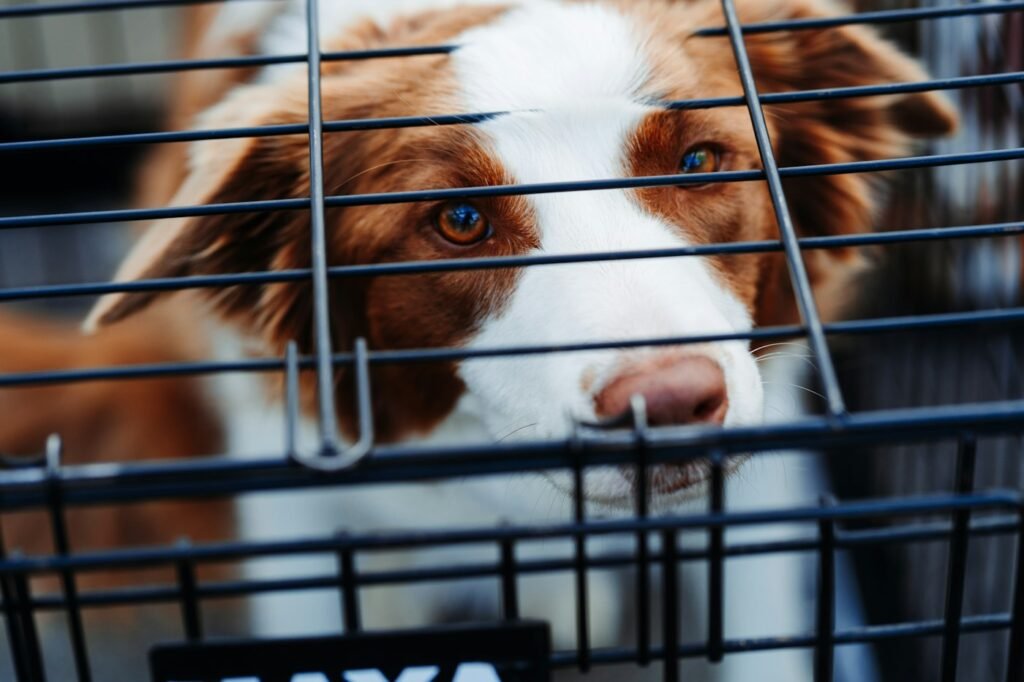
Disclosure: As an Amazon Associate we earn from qualifying purchases. This guide is educational and is not a substitute for advice from your veterinarian.
Picture a dog that has bent the door of a wire crate, shoved the tray out of the bottom and been found in the hallway with a bloody paw. The obvious fix looks like a bigger, tougher crate. It is also the fix that can turn a bad situation into a worse one.
An escape proof dog crate is an appealing idea, and heavy-duty models do exist. But a dog who breaks out is communicating something: fear, distress, boredom, a full bladder or pain. Strength matters, yet it only answers the last part of the problem, how the dog gets out. This guide helps you work out why the escapes are happening, what heavy-duty construction really offers, where it falls short and what to do first.
Quick Answer
A heavy-duty crate adds thicker, welded steel and sturdier latches, but no crate is truly escape proof, and a stronger cage can make a panicking dog fight harder and get hurt. If your dog is breaking out in distress, see your vet and a qualified behavior professional before you upgrade the crate.
Why Dogs Break Out of Crates in the First Place
Dogs rarely escape for fun. Most of the time there is a reason, and the reason decides the fix.
Fear or panic. Some dogs feel trapped. They may never have learned that a crate is safe, or a past experience has made confinement frightening. These dogs often drool heavily, pant, shake or try to chew through anything in reach.
Distress at being alone. For some dogs, the crate is not the issue at all. The problem is the owner leaving, and the crate is simply where the dog is when it happens. Pacing, howling and destructive behavior that also appears in an open room point this way.
Boredom and excess energy. A young, athletic dog who has had too little exercise may treat the crate like a puzzle. The effort is often paired with barking and restlessness rather than the glassy panic of true fear.
Needing to eliminate. A dog left too long, or one with a stomach upset or urinary problem, may try to get out because they cannot hold it.
Pain or a medical issue. An uncomfortable dog, or one who is newly senior, can suddenly stop tolerating a crate they used to accept.
You usually cannot tell these apart by looking at the broken latch. That is why the first step is observation, ideally with a camera that shows what happens in the first twenty minutes after you leave.
The Injuries That Come with Crate Escape Attempts
The physical risk is the strongest reason to slow down before buying a stronger crate. Dogs that fight a crate can hurt themselves in ways owners do not expect.
Teeth and gums are often the first casualty. Chewing on metal bars can fracture teeth or cut the mouth. Nails tear when a dog scrabbles at a tray or door, and paws get cut or scraped raw. A dog may get a jaw, leg or toe wedged in a gap or caught in a bent bar. Prolonged panic also leads to overheating, exhaustion and stress that does not end when the dog is let out.
A stronger crate does not remove these risks. It changes them. A dog who could not bend the old crate may now spend an hour fighting a new one with the same determination and nowhere to go. If you see blood, broken nails, heavy drooling that soaks the bedding or damaged teeth, treat it as a medical and behavioral matter, not a hardware problem.
Panic or Protest? How to Tell the Difference
Some fussing in a new crate is normal. Many dogs whine, circle and test the door for a few minutes, then settle. Real panic looks different.
Picture two dogs. The first whimpers when the owner leaves, paws at the door a few times, then lies down and chews a stuffed toy. The second starts howling the moment the front door closes, drools into a puddle, and has chewed through two crate pans and a blanket by the time the owner returns. The first dog probably needs gradual crate training. The second needs a veterinary check and professional help.
Signs that point toward panic include ongoing frantic effort rather than short bursts, heavy salivation, soiling the crate in a dog who is normally clean, escape attempts that recur in every setting, and damage to the dog’s own body. If your dog behaves this way, the American Veterinary Society of Animal Behavior at AVSAB behavior and humane-training position statements is a professional organization of veterinarians interested in behavior, and a good place to read about how behavior problems are evaluated. Your own veterinarian can refer you to a veterinary behaviorist or a qualified trainer.
What a Heavy-Duty Crate Actually Adds
If your dog is calm but simply strong, such as a determined large breed who bends ordinary wire, heavy-duty construction can help. Marketing for the phrase varies, so compare specifics.
| Feature | What to look for | Why it matters | Limit |
|---|---|---|---|
| Metal thickness | Thicker steel tubing or rod, often given as a gauge (a lower gauge number means thicker metal) | Resists bending and spreading | Heavier to move |
| Construction | Welded joints instead of bent wire | Fewer weak seams at corners | Welds can still fail |
| Latches | Multiple slide bolts or a latch with a secondary lock | Harder to nudge or lift open | Dogs can learn to work any latch over time |
| Bar spacing | Tight enough that a jaw or paw cannot wedge | Reduces catching and chewing | Tighter bars can reduce visibility |
| Floor | Solid, non-slip pan with no gaps | Stops dogs from lifting or dragging the tray | Harder to clean |
| Door design | Reinforced frame, flush fit | Stops prying at corners | Heavy doors can be awkward |
| Weight and footprint | Heavy enough not to slide or tip | Dog cannot push it across the room | Difficult to carry or store |
A short list of questions will help you cut through listings. Do the panels connect with welds or with clips? Does the door sit flush against the frame, or is there a gap where a paw could pry? Can you read the metal thickness in the specifications? A seller that cannot answer these is selling an image.
Where Even a Strong Crate Fails
No crate will hold every dog. Determined dogs find the weak point, and weak points are usually small.
Latches fail more often than walls. Bump the same spot at the same angle often enough and a slide bolt can flip. Corners get pushed apart over time. Floor trays can be dragged out through a gap at the bottom of the door. A light crate can be walked across the room, and a stack of crates can topple. Steel is sturdy, but a dog who has found success once will try again.
There is another limit, and it is the most important one: the dog’s own wellbeing. A crate that holds a terrified dog still leaves the dog terrified. Pairing a stronger crate with no change in training or care is a way of containing a symptom, not solving it. For many dogs, the better answer is not a different crate at all. Our guide to choosing between a crate, playpen or gate explains the alternatives, such as a securely gated room for dogs who cannot cope with close confinement.
A Plan to Follow Before You Spend More
Instead of reaching for the biggest lock available, work through these steps in order.
- Rule out medical causes. See your vet, especially if the escaping began suddenly or the dog is older. Pain, digestive trouble, urinary problems and cognitive changes can all appear as crate refusal.
- Film the departure. A short video shows whether the dog is bored, panicked or distressed by your absence. It also gives a professional something concrete to evaluate.
- Rebuild the crate’s meaning. Meals and calm rewards inside the crate, with the door open at first, help a mildly resistant dog. Do this gradually and never as a punishment.
- Increase appropriate exercise and mental work before departures, in ways suited to your dog’s age and breed.
- Get qualified help for anything that looks like panic. A veterinary behaviorist or a certified trainer experienced in separation-related problems can build a plan, which may include medication decisions made by your vet.
- Offer another setup while you work on it. A dog-proofed room, a pen or a sitter, depending on the case, can protect both the dog and your home.
Do not rely on toys to calm a dog in distress. Our article on toys for dogs left home alone explains why chew items need careful judgment when nobody is watching.
If You Still Decide a Heavy-Duty Crate Is Right
Some dogs are not panicking at all. They are strong, restless and clever, and a standard crate simply was not built for them. In that case a heavy-duty model is a sensible tool, used alongside good exercise and supervision.
Measure carefully so the dog is not cramped, since a tight fit encourages more struggling. Our dog crate size guide walks through that. Anchor or position the crate so it cannot be pushed away from a wall. Check the latches, bars and welds every few weeks for wear. And avoid decorating the crate with extras that a dog can chew or catch a tooth on; if you add bedding, choose a durable option, as explained in our guide to crate covers, mats and bedding.
Upgrade Mistakes That Make Matters Worse
- Buying a stronger crate before finding the cause. It may hold the dog while the underlying distress grows.
- Adding padlocks, wire or cable ties. They can trap a dog in an emergency and injure one who chews at them. Use the manufacturer’s fasteners.
- Leaving a collar on. Collars and tags can catch on bars during struggles. Ask your vet what they advise for your dog.
- Using the crate to punish. A crate tied to punishment becomes something the dog fears, which is the opposite of what you need.
- Ignoring the first sign of injury. A broken tooth or cut paw gets worse with repeated attempts.
- Leaving a distressed dog alone for longer to “teach” them. Distress can deepen with that approach.
For general guidance on caring for a dog with behavior concerns, AVSAB behavior and humane-training position statements and AVSAB behavior and humane-training position statements are good places to start before you talk to your own vet.
Frequently Asked Questions
What makes a crate heavy-duty?
Typically thicker steel, welded joints, reinforced doors and more than one latch. There is no universal standard, so compare actual specifications such as metal thickness and construction method instead of relying on the label.
Will a heavy-duty crate stop separation anxiety?
No. It may stop the dog from leaving the crate, but it does not change why the dog is distressed. Dogs with this kind of distress usually need a structured plan from a vet or qualified trainer.
Is it safe to leave an escape-prone dog in a crate while I work?
That depends on why the dog escapes. A dog who is calm but strong may be fine in a secure crate, while a panicking dog should not be crated alone. Your vet or trainer can help you judge the risk.
Can I use a crate with a dog who chews the bars?
Chewing bars can damage teeth and gums, so it is a warning sign rather than a habit to manage. Talk to your vet, and consider a different confinement option such as a dog-proofed room while you address the cause.
How do I know if the latches are secure enough?
Test them yourself. Push, lift and jiggle the door the way a determined dog would. If you can open it with a nudge from inside, a dog eventually will too. Secondary latches help, but use manufacturer-designed ones.
Are plastic or soft crates ever suitable for escape artists?
Generally not. Plastic can be chewed or cracked and soft crates are easily torn or unzipped. If your dog escapes from a standard crate, step up to a better-built one only after you have looked into the cause.
Fix the Reason, Then Choose the Hardware
Spend the next week gathering information instead of spending money. Book the vet visit, film a departure and make a note of what your dog does in the first minutes. That evidence will tell you whether you need a stronger crate, a training plan, a different room or all three. A heavy-duty crate bought with that clarity does its job. One bought in frustration usually does not.