
Dog Life Jackets: How to Choose One and When Your Dog Needs It
By · Updated November 2, 2026
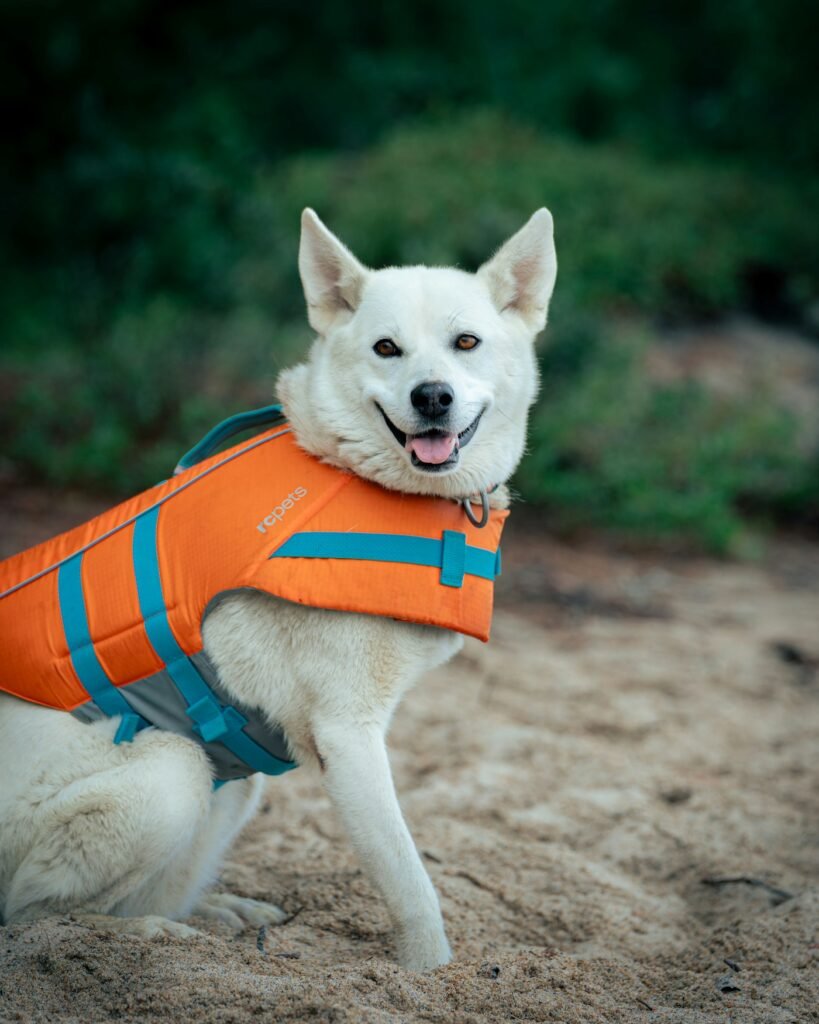
Disclosure: As an Amazon Associate we earn from qualifying purchases. This guide is educational and is not a substitute for advice from your veterinarian.
There is a common belief that every dog is born to swim. The evidence at any lake says otherwise: some dogs paddle with their front legs only, some sink at the hips, and some panic the moment their feet leave the bottom. Even good swimmers get tired, cold, or caught in a current, and a dog that is too far out to reach is a hard problem to solve.
A dog life jacket will not make water safe, but it buys time, keeps the head higher, and gives you something to grab. This guide covers which dogs gain the most, what features separate a useful jacket from a decorative one, how to fit and introduce it, and the hazards in the water that no flotation device can address.
Quick Answer
Many dogs cannot swim well, and short-legged, heavy-chested, or flat-faced breeds tire fast. A dog life jacket is wise for boating, open water, currents, weak swimmers, and seniors. Look for flotation under the chest and neck, a top handle, bright color, and a snug adjustable fit. It reduces risk but never replaces supervision.
Swimming Is Not Automatic
Breed gives clues but not guarantees. Retrievers and spaniels were developed around water and often swim well, while many dogs, including bulldogs, pugs, basset hounds, corgis, and dachshunds, are built differently. Short legs make paddling inefficient, a heavy chest and large head sit low in the water, and a flat face makes breathing in water harder.
Individual dogs vary a lot, even within a breed. Some Labradors dislike water, and some terriers love it. Age also matters: older dogs lose strength and stamina, and a dog who swam easily at three may struggle at ten.
Treat swimming as a skill that must be observed, not assumed. Watching a dog in shallow, calm water, with you beside them, tells you more than breed standards do.
When a Jacket Is Worth Wearing
Some situations make flotation a smart default.
- Boating, kayaking, canoeing, and paddleboarding. A dog can go overboard unexpectedly, and a jacket gives you a handle to lift them back in.
- Open water. Lakes, rivers, and the sea involve distance, depth, and currents that a dog may not judge.
- Cold or choppy water. Cold tires dogs quickly.
- Weak swimmers and new swimmers. Short-legged, heavy-bodied, and flat-faced dogs usually fit here.
- Senior dogs and dogs with health limits. Fatigue arrives sooner. Ask your vet if exercise in water is suitable, especially for dogs with heart or joint conditions.
- Dogs recovering from surgery. Only under your vet’s direction.
A jacket is less necessary for a strong swimmer splashing in a calm shallow pond with you beside them, though many owners use one anyway for the extra margin.
Features That Matter
Look closely at the details, since many “life jackets” are thin vests with a bright print.
| Feature | Why it matters | What to check |
|---|---|---|
| Flotation under chest and neck | Keeps the front of the body and head higher | Buoyant panels at the belly and a neck support or collar section |
| Top grab handle | Lets you lift the dog from the water or a dock | Strong stitching and a handle large enough to grip |
| Bright color and reflective trim | Makes the dog visible in water and low light | Orange, yellow, or other high-visibility colors |
| Adjustable straps | Fits different body shapes | Multiple points around the neck, chest, and belly |
| Quick-release buckles | Allows fast removal in an emergency | Sturdy plastic or metal; test them wet |
| Snug body fit | Stops the jacket sliding over the head | Shouldn’t ride up when you lift by the handle |
| Material | Dries and stays comfortable | Check for chafing at the armpits; look at drying time |
| Size range by chest girth | Helps with correct fit | Follow the maker’s measuring instructions |
Skip anything that looks like a costume. Check that the buoyancy panels cover enough of the body, and that the neck support does not push into the throat.
Getting the Fit Right
Fit decides whether the jacket works. Measure your dog’s chest girth at the widest point behind the front legs, the neck, and the length from collar to the base of the tail. Use the maker’s size chart, not a weight guess, and see our guide on measuring and fitting a dog harness for the technique.
Put the jacket on and fasten it. You should be able to slide a couple of fingers under the straps, but the jacket should not shift when the dog moves. Lift the handle gently. A well-fitted jacket stays on the body, while a loose one rides up toward the ears.
Check for chafing at the front legs, and make sure the dog can walk, sit, and lie down comfortably. Test it again in the water, since fit changes when a jacket is wet. If your dog is between sizes, try both, and choose the one that holds steady.
Introducing the Jacket and the Water
A jacket introduced at the lakeside is likely to become a bad memory. Start at home.
Let the dog sniff it, offer treats, then fasten it for a minute at a time. Wear it indoors and on walks. When the dog accepts it, go to shallow water. Wade in beside the dog, support the belly if needed, and let them paddle for a short time. Praise calm behavior.
Never throw a dog into the water. Never force the issue. Some dogs need several short sessions before they are comfortable. Rinse the jacket afterward and let it dry fully.
Hazards a Jacket Does Not Solve
A life jacket reduces the risk of drowning. It does not remove it, and it does not protect against everything that can go wrong around water.
Currents and moving water. A dog in a jacket can still be swept away. Avoid fast rivers, surf, and areas near dams or weirs.
Cold water. Hypothermia can set in quickly, and a jacket does not warm the dog.
Exhaustion. Dogs keep swimming for a ball long after they should stop. Rest regularly.
Exit points. Docks, steep banks, and boat sides can be hard for a dog to climb. Plan where they will get out, and keep a path in mind.
Water quality. Harmful algae blooms, common in warm weather in some lakes and ponds, can be toxic to dogs. Look for local advisories before swimming, avoid scummy or discolored water, and rinse your dog after a swim. If your dog becomes ill after swimming, contact a vet at once. Do not let your dog drink from ponds, scummy or discolored water, or other standing water. Dog life jackets are not covered by the standards that apply to human life jackets, so check buoyancy and fit yourself rather than trusting a label.
Supervision. Keep your dog within reach, and never leave a dog unattended near water.
The ASPCA travel safety guidance and the ASPCA travel safety guidance give general pet safety information, and your veterinarian knows your dog’s health and local risks.
Jacket Styles Compared
Advantages
- A full-coverage flotation jacket keeps the head and chest higher, adds a handle, and suits boats and open water.
- A slim neoprene-style vest is lighter and less restrictive, which may suit confident swimmers in calm water.
Drawbacks
- A full-coverage jacket is bulkier, warmer in the sun, and may restrict some dogs' movement.
- A slim vest offers less buoyancy and may not suit weak swimmers or deep water.
Bulldog, Old Lab, Young Retriever: Who Wears What
Picture a bulldog on a pontoon boat. Flat face, heavy chest, short legs: this is a dog who should wear flotation every time. Choose a jacket with strong neck support and a sturdy handle, and practice in shallow water first.
Picture a ten-year-old Labrador at a family lake. Previously a strong swimmer, now slower. A jacket helps keep the head up as stamina fades, and rest breaks matter. Ask your vet about exercise limits.
Picture a young retriever on a kayak trip. A good swimmer, but a boat flips, and cold water is hard. The jacket and a plan for getting back on board are the point.
Mistakes That Undermine a Jacket
- Choosing by color or print. Look at buoyancy and handle strength.
- Buying too large. A loose jacket slips off the body.
- Skipping the practice. A new jacket at the water’s edge often creates fear.
- Trusting it for unsupervised swimming. It reduces risk but does not replace you.
- Ignoring local conditions. Currents and algae advisories matter.
- Forgetting to rinse and dry. Lake water and salt degrade fabric and cause odor.
Packing It for the Trip
Lay the jacket out with your other items before you leave. Our road trip packing list for dogs covers towels, spare leashes, and cleanup supplies that go with a water day. If your day includes a hike to the water, our guide to dog backpacks and hiking gear helps with the rest. And on hot days, our piece on cooling vests and heat safety is worth a look before you commit to a dark-colored jacket in full sun.
Frequently Asked Questions
Does my dog need a jacket if they swim well?
Not always, but many owners use one near boats or open water. Even strong swimmers tire, and a handle makes a rescue easier.
How tight should the jacket be?
Snug enough that it does not slide up toward the ears when you lift the handle, yet loose enough to slide two fingers under the straps. Check the fit wet as well as dry.
Can puppies wear life jackets?
Some makers offer small sizes, and a jacket can help in introductions to water. Ask your vet about water exposure for puppies and about when it is safe.
What colors are best?
High-visibility colors such as orange or yellow stand out against water and in low light. Reflective trim helps at dusk.
How do I clean a life jacket?
Rinse in fresh water after each use, especially after lakes or the sea, and dry it fully in the shade. Follow the care label.
What should I do if my dog swallows lake water and seems unwell?
Contact a veterinarian promptly, and mention where the dog swam. Water contamination and algae can cause illness, and symptoms may appear after you leave.
Make the First Swim a Short One
Start with a fitted jacket, shallow water, and a short session that ends while your dog is still curious. Do that a few times before you head for a boat ramp or an open lake. A dog who trusts the jacket and the water, and an owner who knows how the dog moves in it, is the combination that makes a day on the water safe enough to enjoy.