
Bolster, Flat, or Donut? Matching Bed Shape to How Your Dog Sleeps
By · Updated November 2, 2026
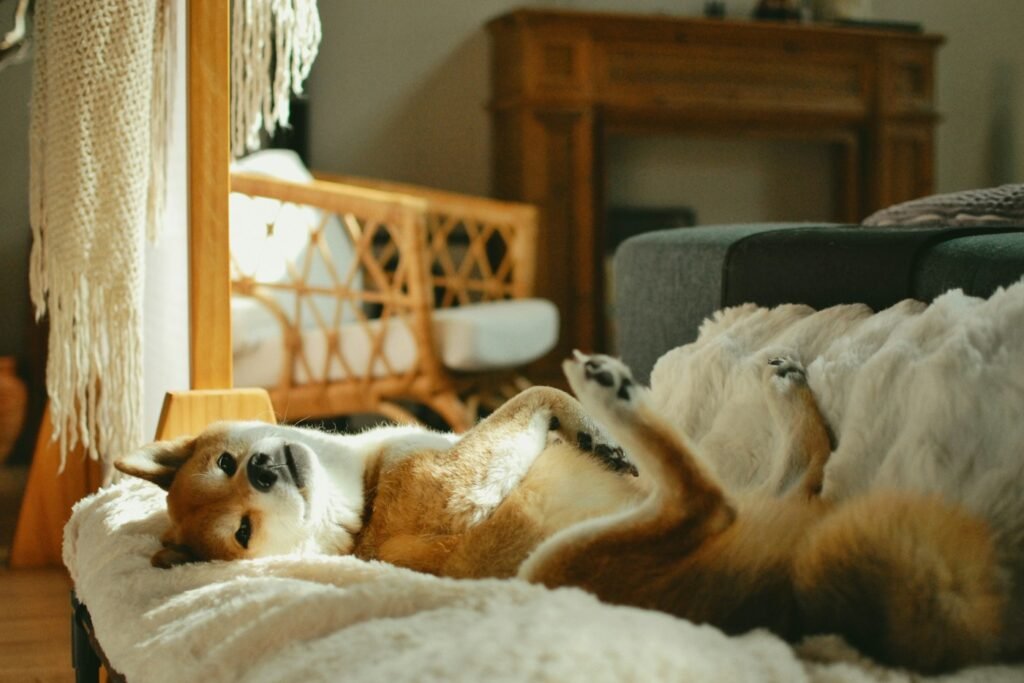
Disclosure: As an Amazon Associate we earn from qualifying purchases. This guide is educational and is not a substitute for advice from your veterinarian.
Two dogs of the same size, same age, and same weight can each reject the bed the other loves. One circles and tucks in tight against a wall of cushion. The other sprawls on the kitchen floor with legs akimbo. The difference is not stubbornness. It is shape.
The many types of dog beds all come down to a few basic forms, and each one makes a different promise about support, security, and temperature. Rather than start with the catalog, start with the sleeper. Once you know how your dog rests, the shape almost chooses itself, and the rest of the decision is size, fill, and washing.
Quick Answer
Match the shape to the sleeper. Leaners and head-proppers like bolsters, sprawlers want flat mats or mattresses, tight curlers and nesters often settle into donuts, and burrowers choose caves or a bed plus a blanket. Dogs who overheat should skip deep walls. Calming beds are comfort items, not treatment for anxiety.
Five Sleepers, Five Silhouettes
Watching your dog for a few evenings tells you more than any product page. Look for these patterns:
- The wall-seeker presses against a sofa, a wall, or you. They want something to lean on.
- The head-propper looks for an armrest, a pillow, or a lip of bedding to rest their chin on.
- The sprawler stretches flat, belly up or side down, usually in warm weather.
- The nester turns circles, kneads, and finally curls into a tight ball.
- The burrower pushes under blankets and appears to want a roof.
Many dogs do more than one, and seasons change them. A dog who sprawls in summer may nest in winter. If yours does both, you may want a bed shape that works for the more demanding position, plus a blanket. For more on measuring each posture, see our dog bed size guide.
What Each Shape Really Does
Understanding the mechanics helps you avoid buying a shape for the wrong reasons.
Bolster beds have raised sides on two, three, or four edges. The raised sides act as a backrest, a pillow, and a draft barrier. The trade-off is a smaller usable sleeping surface, and a rim to step over.
Flat mats and cushions have no walls. They offer maximum surface area, easy entry, and good airflow. They provide nothing to lean on unless you place them against a wall.
Donut beds are round with a raised, soft rim and a sunken center. The dog curls into the hollow. Many dogs appreciate the enclosed feel. The dished center can make it harder for a large or stiff dog to stretch or get up.
Cave and burrow beds have a hood or a covered section for the dog to crawl into. They suit dogs who like to hide, but they trap warmth and can be a nuisance for dogs who dislike enclosed spaces.
Mattress-style beds are thick, rectangular, flat slabs, often with a low rim. They are good for big dogs and for those who change position often.
Comparing the Shapes at a Glance
| Shape | Best for | Watch out for |
|---|---|---|
| Bolster | Wall-seekers, head-proppers, dogs who like to lean | Smaller floor area than the outer size suggests; high rim for stiff dogs |
| Flat mat or cushion | Sprawlers, dogs who run warm, quick-folding for travel | No support for leaning; may slide on smooth floors |
| Donut or calming bed | Nesters and tight curlers, small dogs | Large dogs may not fit; hard to rise from for dogs with sore joints |
| Cave or burrow | Burrowers, dogs who seek hiding places | Too warm for heavy coats; entry can be awkward |
| Mattress | Large dogs, shifting sleepers, seniors | Takes floor space; heavy to move and wash |
Which Shape Suits Which Dog
Beyond sleeping style, some traits push the choice one way or another.
Anxious or sensitive dogs. Dogs that startle easily often settle better in enclosed shapes: a bolster in a quiet corner, a donut, or a cave. Be realistic about what these do. A calming-style bed is a comfort item with a soft rim and a plush feel. It does not treat anxiety, and a dog with distress at being alone or around noise needs a conversation with your veterinarian or a qualified behavior professional.
Big dogs. Large and giant breeds usually do better on a thick mattress or a large bolster with a firm base. They need room to stretch and support that does not flatten. See our comparison of orthopedic and memory foam beds for what to check inside.
Small dogs. Small dogs love nests, so donuts and small bolsters work well. Beware of a bed so large that it feels exposed.
Dogs who overheat. Thick walls and plush fill trap warmth. Choose a flat, breathable design, a cot, or a mat with an open side. Our guide to cooling dog beds explains the options.
Dogs that run cold. Thin-coated, small, and older dogs often like a bolster, a cave, or a blanket. See our warm dog blanket comparison.
Stiff or older dogs. Look for a low entry, which usually means a flat or low-sided mattress rather than a deep donut.
Picture How Each Dog Actually Sleeps
Picture a twelve-pound terrier who spends the evening pressed against the sofa. A small bolster bed placed against the sofa base gives him a backrest on two sides. A flat cushion would be ignored, since there is nothing to lean on.
Now picture a sixty-pound mixed breed who flops in a different place each night. A big flat mattress lets him sprawl, flip, and change positions without bumping into a rim, and the missing walls keep him cooler.
And picture a small hound who goes under every blanket she finds. A cave bed may look charming, but she might be just as happy with a flat bed plus a throw she can burrow into. The throw has the advantage that she can leave whenever she wants.
Bolster, Flat, Donut: Trade-offs in Short
Advantages
- Bolsters give a headrest and a feeling of security, and they block drafts along the floor.
- Flat mattresses offer the most usable surface, easy entry, and better airflow for warm sleepers.
Drawbacks
- Bolsters and donuts reduce the sleeping surface and add a rim that stiff or older dogs may find hard to climb.
- Flat beds give nothing to lean on and can feel exposed to dogs that want to be tucked in.
The Room Changes What a Shape Can Do
The same bed behaves differently in different spots. A flat mat in the middle of an open room gives a wall-seeker nothing, but the same mat pushed into a corner gains two backrests for free. A bolster bed in a drafty hallway earns its keep, while the same bed beside a radiator may be too warm to touch.
Before settling on a shape, decide where the bed will live. Corners and sofa bases reward flat mats. Open floor rewards bolsters. Crates and small nooks favor thin, flat pads. If the bed is meant for a spot you share, such as the foot of your own bed, choose something light enough to move and wash easily.
When Your Dog Changes with the Seasons
Many dogs shift sleeping postures as the temperature changes. In warm months they may sprawl on cool floors and avoid anything enclosed. In cold months, they may curl and burrow.
You do not need two beds, though some owners keep one. A simple approach is a flat or mattress-style base all year, with a bolster insert or rolled blanket added for winter, and a washable cover that can be swapped. Another is a bed with a removable bolster. If your dog goes cold-weather nesting, a throw blanket on top of a flat mat provides the cave effect.
Mistakes in Choosing a Bed Shape
- Buying a donut for a dog who sprawls. The dog may hang out of it and then choose the floor.
- Buying a bolster without checking usable area. Walls may take a third of the sleeping space.
- Choosing a cave for a dog who overheats or dislikes enclosed spaces. Always let the dog opt out.
- Assuming “calming” means treatment. Soft and enclosed is a comfort feature. It does not address the cause of fear or anxiety.
- Ignoring the floor. A flat mat that slides on tile gives the dog nothing to rely on, so use a rug or a non-slip base.
- Ignoring the dog’s reaction. If your dog avoids the new shape, the problem may be placement or smell. Our guide to why your dog won’t use a new bed gives a step-by-step approach.
For general dog care and behavior information, you can browse the ASPCA general dog care guidance or the AVSAB behavior and humane-training position statements.
Frequently Asked Questions
Which type of dog bed is best for a dog who changes positions?
A large flat or mattress-style bed gives the most freedom, since no rim or hollow restricts movement. Add a rolled towel or blanket if your dog also likes to prop their head.
Do donut beds really calm dogs?
Some dogs seem to settle more easily in a soft, round, enclosed shape, but there is no guarantee. Treat it as a comfortable bed for a dog who likes to curl, and talk to your vet if anxiety is a concern.
Are cave beds good for small dogs?
They can be, particularly for dogs that like to hide or burrow. Make sure the entrance is easy to use, the dog can turn around inside, and there is enough ventilation.
Can a bolster bed be too high?
Yes. For small dogs, older dogs, and dogs with sore joints, a tall rim is an obstacle. Choose a lower wall or a design with an open front.
Should the bed be against a wall?
Many dogs like at least one side backed by something solid. A flat bed pushed into a corner or against a sofa often imitates the support of a bolster.
Is a crate bed the same as a regular bed?
Not necessarily. Crate pads are often flat, lighter, and sized to the crate. Check the dimensions and the cover before assuming a regular bed fits.
Pick the Shape Your Dog Already Chose
The easiest way to choose is to look at where your dog sleeps now. Do they press against a wall, hang a chin over an edge, or stretch across the floor? Copy that arrangement in a bed, in your dog’s size, and the new bed will make sense to them from the first night.