
How to Remove Dog Hair From Furniture, Carpet, and Clothes
By · Updated November 2, 2026
Disclosure: As an Amazon Associate we earn from qualifying purchases. This guide is educational and is not a substitute for advice from your veterinarian.
Dog hair does not simply sit on fabric. It weaves in. Short, stiff hairs behave like tiny barbs that work into the weave of upholstery and the loops of carpet, and every time someone sits down or walks across, they get pushed deeper. That is why a lint roller sometimes seems to move hair around without winning. If you want to remove dog hair from couch fabric for good, the method matters more than the muscle.
The trick to getting dog hair off the couch, or off any surface, is a two-step approach: loosen the hair first, then collect it. Vacuums alone often skim over the stubborn layer, and a roller alone covers too little ground. This guide goes surface by surface, explains which fabrics cause the most trouble, and suggests how to cut the amount of hair arriving in the first place.
Quick Answer
To remove dog hair from couch upholstery, loosen it first with a rubber tool or damp rubber glove, then vacuum with an upholstery attachment and finish with a lint roller. Carpet needs a rubber broom or squeegee before the vacuum, clothes need a roller or a tumble in the dryer, and hard floors need a microfiber mop.
Why Some Surfaces Hold Hair and Others Let Go
Before you choose a method, look at what you are cleaning. Smooth, tightly woven surfaces such as leather, faux leather, and tight microfiber let hair sit on top, where a damp cloth or rubber tool lifts it easily. Textured weaves such as chenille, velvet, corduroy, tweed and looped carpets grip hair. Wool blends and fleece create static that makes things worse.
Hair color matters too. A black Labrador on a cream sofa looks dramatic even after a good clean, while a golden retriever disappears into a beige weave. Matching a throw or cover to your dog’s coat color reduces what you see between cleans.
If you are choosing new furniture or covers, the fabric choice helps more than any tool. The waterproof dog blankets and furniture covers guide explains how washable layers keep hair off the upholstery in the first place.
Surface, Tool, Tip
The table below is the quick version. The sections after it explain the logic.
| Surface | Best first tool | Follow with | Tip |
|---|---|---|---|
| Upholstery (couch, chair) | Rubber squeegee, rubber glove, or damp rubber brush | Upholstery vacuum attachment, then lint roller | Check the cleaning code tag before using any damp method |
| Cushion crevices and seams | Crevice tool or soft brush | Lint roller on edges | Remove cushions and work from the sides in |
| Low-pile carpet | Rubber broom or squeegee | Vacuum | Pull toward you in short strokes to gather rows of hair |
| Thick or looped carpet | Vacuum with agitation, passes in two directions | Rubber broom on stubborn spots | Check the brush roll for wrapped hair |
| Hard floors | Microfiber dust mop or dry sweeper | Vacuum with hard-floor head | Sweep gently; fast sweeping scatters hair |
| Clothes | Reusable or adhesive lint roller | Dryer tumble on a no-heat setting | Shake outside first; tumble before washing |
| Car seats and cargo area | Rubber brush, then handheld vacuum | Damp cloth on vinyl | Work from the top down |
| Bedding and throws | Shake outdoors | Dryer tumble, then wash | Clean the dryer lint filter right after |
Couches and Upholstery
Start by checking the tag under a cushion. Fabric cleaning codes tell you whether water is safe (a W code), only a solvent (S), either (WS), or vacuum only (X). If your fabric is vacuum only, skip damp methods and stick to dry tools.
For most fabrics, a damp rubber glove is the easy fix: wet it, wring it out, and drag your hand across the cushion. The hair rolls into clumps you can lift off. A rubber squeegee or a dedicated rubber upholstery brush does the same job over a larger area, and you can use it dry on tightly woven fabrics. Always test any damp tool on a hidden area first, because some fabrics water-spot.
Then vacuum with an upholstery or crevice attachment to collect the clumps and what remains. A lint roller on the edges and seams finishes things. Remove loose cushions and vacuum the seams where hair collects. Picture a Labrador owner who cleans a charcoal sofa on Sunday evening: a rubber squeegee in one direction, the vacuum over the loosened rows, and two minutes of roller on the arms leaves the sofa looking presentable for the week.
Advantages
- Reusable rubber tools gather hair into clumps, cost little to run, and work on many surfaces.
- Reusable rubber tools are good for a quick daily pass by the sofa.
- Adhesive rollers are fast on clothes and light-colored fabric, and good for finishing.
Drawbacks
- Reusable rubber tools can be slow on large areas and do little on very short, embedded hairs.
- Adhesive rollers run out of sticky sheets quickly and add to household waste if used for big jobs.
Carpet and Rugs
A vacuum alone often skims the hair that sits deep. Loosen it first with a rubber broom or squeegee: drag it across the carpet toward you in short strokes, and the hair collects into rows. Vacuum afterward. On thick or looped carpet, passes in two directions help, and a vacuum with a brush roll that agitates the fibers pulls up more.
For small rugs, take them outside, hang them over a railing, and beat or shake them. Shaking and beating frees hair caught in the backing, which a vacuum on the top side never reaches.
What Matters in a Vacuum
If you are shopping for a vacuum for pet hair, these features matter more than headline suction numbers:
- Brush roll that is easy to clean. Long hair wraps around bristles, so look for one that you can open and cut free, or one that resists tangling.
- The ability to turn agitation off. Useful on hard floors, where a spinning brush scatters hair.
- Good attachments. A soft upholstery tool, crevice tool and a motorized or rubber-bristle head are the most useful.
- A large, easily emptied bin or a bag you can replace. Pet hair fills containers quickly.
- A filter that is washable or easily replaced. Dander and fine dust clog filters.
- Weight and cord or battery. A vacuum that is hard to carry will not get used on stairs and furniture.
Some owners keep two machines: a full-size vacuum for floors and a light handheld for the sofa and car.
Clothes, Laundry and Bedding
Shake the item outdoors first, then use a roller. For laundry, running clothes through a short tumble in the dryer on a no-heat or air-only setting for about ten minutes can loosen hair, which collects in the lint filter. Clean the filter afterward. Tumble before you wash, because wet hair clings to fabric and ends up in the drum.
Wipe the washer drum if you notice hair left behind, and avoid overloading, since cramped loads rinse poorly. For dog bedding, shake it outside, then tumble and wash as the care label instructs.
The Car and Hard Floors
The car holds hair in seat seams and the cargo area carpet. A rubber brush works as well there as on a couch, and a handheld vacuum finishes the job. A seat cover or hammock does the bulk of the work; our comparison of car seat covers and hammocks explains how each protects the upholstery.
On hard floors, hair drifts into corners and under furniture. A microfiber dust mop picks up fine hair that a broom flicks around. If you use a vacuum, switch off the beater bar or choose a hard-floor setting so it doesn’t scatter hair. A damp mop afterward lifts dander and dust.
Cutting Hair Off at the Source
Cleaning is half the answer. The more hair you remove from the dog, the less ends up elsewhere.
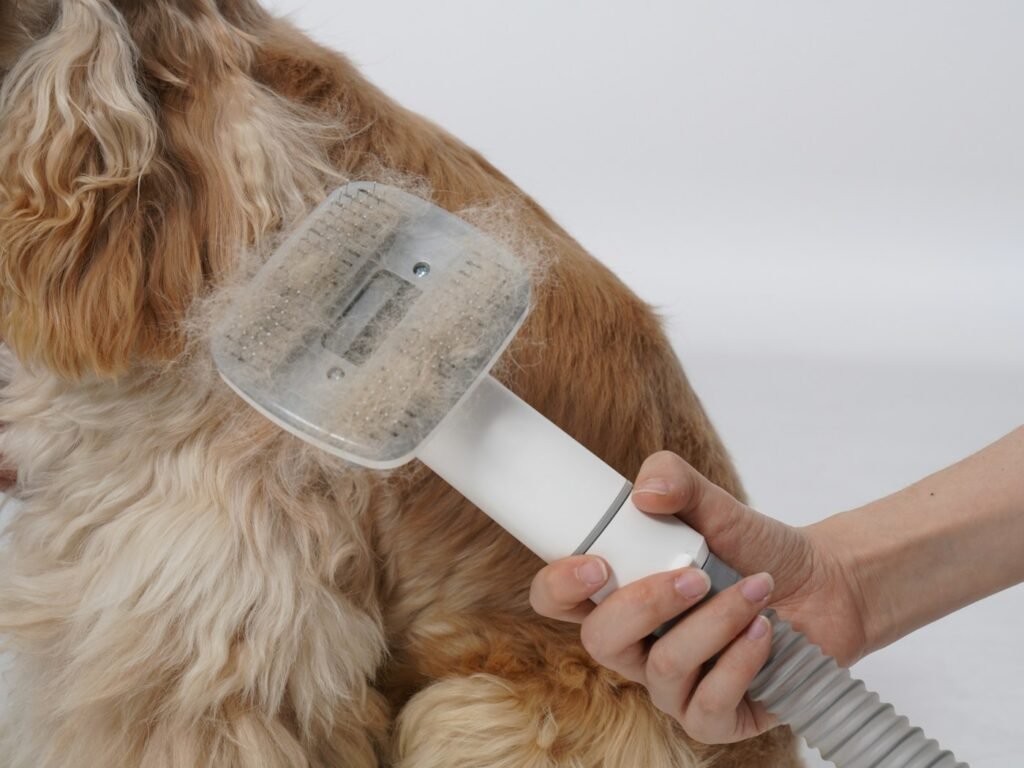
Brush your dog regularly, outdoors if possible. The right brush depends on the coat, and our guide to choosing a brush for your dog’s coat helps match it. For heavy shedders, deshedding tools compared explains rakes, gloves and grooming vacuums. A regular bath loosens dead hair, and brushing right before and a good rinse after helps.
Give your dog a designated sleeping spot with a washable blanket, and keep that blanket on the sofa if the dog is allowed up. A throw is far easier to wash than a sofa. Wipe paws and coat after muddy walks to keep dirt from combining with hair into the sticky layer that is hardest to remove. For broader day-to-day dog care, the ASPCA dog grooming guidance and the ASPCA dog grooming guidance cover grooming and household routines.
Cleaning Mistakes That Make Hair Worse
- Vacuuming first. Without loosening, a vacuum skims off the top layer and leaves the embedded hair.
- Soaking upholstery. Too much water can leave marks or damage the cushion; use a damp, not wet, glove.
- Ignoring the fabric code. A water-based method on a vacuum-only fabric causes stains.
- Rubbing in circles. It pushes hair into the weave; pull in one direction.
- Using a vacuum with a clogged filter. Suction drops, and fine dust blows back out.
- Forgetting the dryer lint filter. Tumbled hair collects there and is a fire risk when allowed to build up.
- Treating heavy shedding as normal. If a dog suddenly sheds far more than usual, or has bald patches or itching, see a vet. The ASPCA dog grooming guidance are a starting point for judging when a skin or coat change needs attention.
Frequently Asked Questions
What is the fastest way to get dog hair off a couch?
A damp rubber glove or rubber squeegee pulled across the surface rolls hair into clumps within a minute or two. Collect it by hand or vacuum, and finish with a lint roller.
Why does vacuuming leave hair behind?
Embedded hairs are woven into the fibers and a vacuum’s suction cannot always lift them. Loosening with a rubber tool first allows the vacuum to collect what’s left.
Do dryer sheets help remove pet hair?
Many people use them for static, but fragrance and chemical ingredients on fabric can irritate some dogs, and a dog who chews a sheet can be harmed. A damp cloth or a rubber tool achieves the same effect with less risk.
Will a shaved dog stop the problem?
Not really. Shorter hairs still fall, and they can embed in fabric more easily. Regular brushing is a more reliable approach, and a groomer or veterinarian can advise on clipping for your dog’s breed.
How do I stop hair from sticking to my clothes?
Wear tightly woven fabrics, avoid wool and fleece around shedding season, and keep a roller by the door. A quick tumble in the dryer before wearing can help.
Are hairless or low-shedding dogs easier on furniture?
They leave less hair, though dander, oils and mud still reach fabric. Washable covers still help.
Pick One Surface and Fix It Properly
Start with the surface that bothers you most, usually the couch. Spend ten minutes on the loosen-then-collect routine, then cover it with a washable throw so the next ten minutes are never needed. Once one surface is under control, extend the same habit to the car and the bedding.