
How to Choose the Right Size Dog Bed
By · Updated November 2, 2026
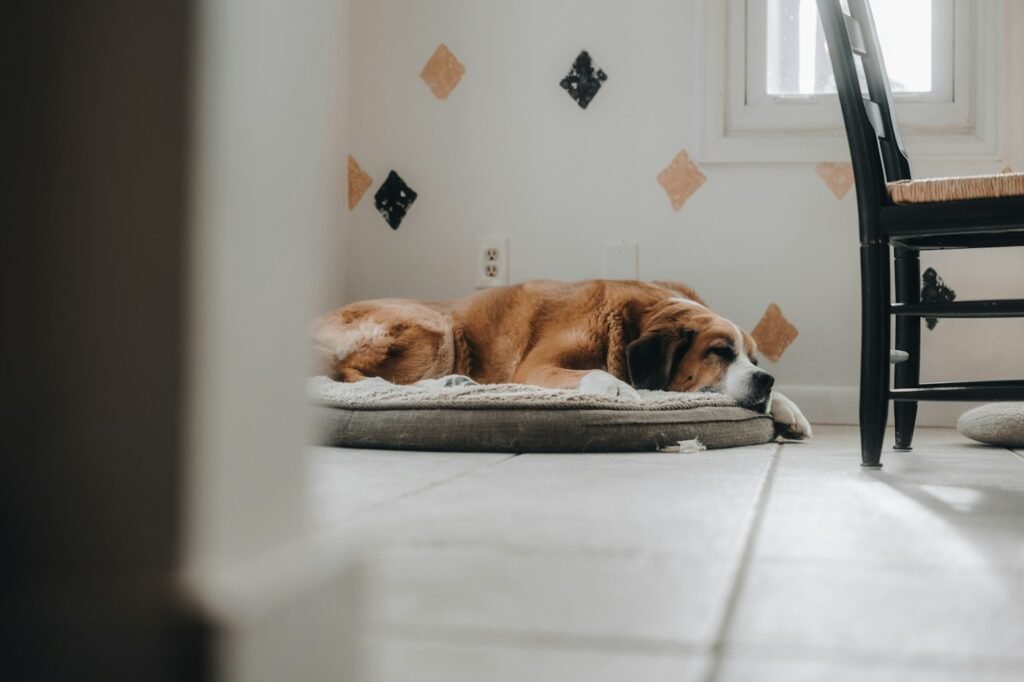
Disclosure: As an Amazon Associate we earn from qualifying purchases. This guide is educational and is not a substitute for advice from your veterinarian.
Most dog beds do not fail because they are cheap or badly made. They fail because they are the wrong size. A bed that is too small leaves legs hanging off the edge and pushes your dog onto the floor, while one that is too large can feel exposed, and a dog who likes to lean against a wall of cushion finds nothing to lean on.
The weight range printed on a product page is a starting point, not an answer. Two dogs that weigh the same can be very different shapes, and two brands can use the same size label for beds that are noticeably different in length. This dog bed size guide shows you how to measure your dog the way they actually sleep, how to read a size chart with some healthy suspicion, and how to match the result to a bed that gets used instead of ignored.
Quick Answer
Measure your dog from nose to the base of the tail while they are lying in their favorite sleeping position, then add a few inches so they can stretch. Sprawlers need a bed at least as long as that stretched-out measurement. Curlers can use a smaller bed. If your dog sits between two sizes, choose the larger one.
Watch How Your Dog Sleeps Before You Measure
A tape measure is useful, but an evening of observation is better. Spend a few nights noticing which position your dog settles into, because that decides which measurement matters most.
Dogs tend to fall into a few sleeping styles. Curlers tuck their nose toward their tail and make themselves compact. Sprawlers stretch flat on their side or belly, sometimes with legs straight out. Leaners rest their chin or whole head on something, such as an armrest, a wall, or the raised edge of a bed. Burrowers push under blankets and like to feel covered.
A sprawler on a bed sized for a curler will hang over the edge within minutes. A curler on a huge flat mat may look lost and choose the hard floor, which at least has a wall nearby. Your dog’s style also changes with the seasons: many dogs stretch out in summer to shed heat and curl up tightly in winter. If your dog does both, size for the stretched-out version and add a blanket for the curled-up months.
How to Measure Your Dog
You need a soft tape measure (or a piece of string and a ruler) and a few minutes when your dog is calm and relaxed.
- Length. Measure from the tip of the nose to the base of the tail, not the tip. Measuring to the tail tip adds length your dog does not need on the bed. For a sprawler, measure while the dog is lying stretched out. For a standing measurement, add a little to account for the stretch.
- Width or height at the shoulder. For flat beds, shoulder height helps you judge how wide the surface needs to be when your dog lies on their side. For bolster beds, it tells you how high the walls can be before they become awkward to step over.
- Weight. Use a recent weight from the vet or a home scale. Treat it as a cross-check, not the main measurement.
- Growth allowance. If your dog is still growing, ask your vet or breeder for a realistic adult size, and size for that rather than for today.
Then add allowance. A general rule many owners use is to add roughly four to six inches (10 to 15 cm) to the length measurement so the dog can stretch without hitting the edge. That is a common rule of thumb, not a standard, so treat it as a place to begin and adjust for your dog’s habits.
Sizing by Sleeping Style
Different sleeping styles call for different rules. This table translates your observations into a sizing approach.
| Sleeping style | What to measure | Sizing rule | Bed shape that tends to suit |
|---|---|---|---|
| Curler | Length when curled, plus shoulder height | Can be slightly shorter than full length; interior should still allow a full turn | Donut, bolster, or cave style |
| Sprawler | Full stretched-out length, nose to tail base | Bed should be at least that length plus allowance | Flat mat, mattress, or low-sided |
| Leaner | Length plus height of the support they lean on | Choose one raised side that is level with the dog’s chin or chest | Bolster or three-sided bed |
| Burrower | Length plus enough room for covers | Size up so a blanket does not crowd them out | Flat mat plus a throw, or a cave |
| Multi-position | Longest of all positions | Size for the stretched-out position | Mattress or large flat bed |
Why Weight Charts Can Mislead You
Almost every bed listing includes a chart linking weight to size, and that makes sense. Dog weight is easy to find out, and it roughly tracks body size. The problem is that the chart tells you very little about shape.
A lean, long-bodied dog may need more bed length than a stocky dog of the same weight. A heavy-set dog may need more width and more support than a long, narrow breed. A fluffy coat can make a dog look larger than they are, which tempts owners to size up unnecessarily, while a short coat can hide a surprisingly long frame.
There is also no industry-wide standard behind the labels “medium,” “large,” or “extra large.” One manufacturer’s large may be another’s medium. Always compare the actual dimensions in inches or centimeters, not the label. And check whether the stated dimensions describe the whole bed or only the sleeping surface inside the bolsters. A bed with generous walls can have a much smaller usable area than the outer measurements suggest.
Sizing Up, Sizing Down, and the Middle Ground
If your dog falls between two sizes, which way should you go? In most cases, size up. A dog can always curl into a larger bed, but cannot stretch out on a bed that is too short. Larger beds also tend to have more filling and can hold up better over time.
There are exceptions. Anxious or nervous dogs often prefer something snug that gives a sense of enclosure. For them, a bed with raised walls that fit closely around the body may be better than extra room. Small dogs who like to nest can also feel lost in a bed that is far too big for them, and older small dogs may struggle to climb over thick walls.
Puppies and Growing Dogs
A puppy can look tiny on a large bed, which is an easy way to waste a purchase. Many owners buy a mid-range bed for the first few months and replace it as the dog grows, or choose a large bed with a removable cushion insert and add rolled blankets to make a smaller nest for now. If you are choosing a bed for a puppy who chews, durability matters more than perfect fit; see our guide to dog beds for chewers first.
Two Dogs, One Bed
Dogs who sleep touching often want to keep doing so. To size a shared bed, measure each dog’s stretched-out length and consider the width needed for them to lie side by side. A large rectangular mattress works better than two small bolsters. If the dogs have different sizes or sleeping habits, two separate beds placed close together can be more comfortable for both.
Matching Size to Bed Shape
Size and shape work together. A bed that is the right length in a bolster style may feel too narrow for a sprawler, while a flat mat that is long enough may offer no support for a leaner. Our guide to bolster, flat, and donut beds explains how shape changes the usable space, and our comparison of orthopedic and memory foam beds covers what to consider when your dog needs extra support.
Advantages
- Sizing up gives room to stretch, lasts longer as a puppy grows, and suits sprawlers and heavy dogs.
- Sizing up also leaves space for a blanket for dogs who burrow in cooler months.
Drawbacks
- Sizing up can feel exposed to nervous dogs and may not fit your space, crate, or car.
- A snug fit offers security for curlers and small nesters but can leave a growing or stretching dog hanging over the edge.
Common Sizing Mistakes
Most returns happen for the same handful of reasons.
- Measuring the standing dog and stopping there. A standing dog and a lying dog have different lengths. Measure in the sleeping position.
- Trusting the label. “Large” means different things from one product to the next. Compare dimensions.
- Forgetting the usable area. Thick bolsters and walls shrink the sleeping surface.
- Buying for the puppy’s current size. A bed outgrown in two months is no bargain.
- Ignoring the space. A bed that suits your dog but blocks the hallway or does not fit the crate will end up in a closet. Measure the spot too.
- Skipping the washing question. A bed too big for your washing machine is hard to keep clean. Check the cover dimensions against your machine; our guide to washable dog beds goes through what to look for.
When a Bed Still Is Not Working
If you have the right size and shape and your dog still avoids it, the problem may not be size. Dogs reject beds because of location, texture, temperature, or discomfort. Our guide to why your dog won’t use a new bed walks through the usual causes and a gradual introduction. If a dog who used a bed happily suddenly stops, or seems stiff or reluctant to lie down, mention it to your veterinarian. Changes in sleeping habits can be an early sign of discomfort, and a veterinarian can assess it in a way that no bed can. The ASPCA general dog care guidance are a good place to learn which changes deserve a call.
For general help understanding your dog’s behavior and care needs, the ASPCA general dog care guidance offers a broad overview that complements breed-specific advice from your own veterinarian.
Frequently Asked Questions
How much bigger than my dog should a bed be?
Many owners add roughly four to six inches to the nose-to-tail-base length, so the dog can stretch out. Treat that as a starting point. A dog who always curls up tightly can manage with less, and a sprawler may want more.
Should I size up for a puppy?
Only moderately. A bed that is far too large can look and feel empty to a small puppy. A mid-sized bed with a removable cushion, or a large bed with rolled blankets used to create a smaller nest, lets you adjust as your puppy grows.
My dog is between two sizes. Which one should I choose?
Choose the larger size in most cases, because a dog can curl in a large bed but cannot stretch in a small one. The exception is a nervous dog who prefers a snug, den-like space.
Do big dogs need orthopedic beds?
Not automatically. Larger and heavier dogs often benefit from thick, supportive filling that does not flatten quickly, but whether a bed is needed for medical reasons is a question for your veterinarian. See our comparison of orthopedic and memory foam beds for the differences.
Is the weight range on the product page reliable?
It is a useful rough guide, but it ignores body shape. Always compare the actual dimensions and check whether they refer to the whole bed or the usable sleeping surface.
How do I size a bed for two dogs?
Measure each dog’s stretched-out length and think about how they like to lie. A large rectangular mattress usually works better than two small bolsters, but separate beds side by side are fine if the dogs prefer their own space.
Take Ten Minutes Before You Order
The best bed size comes from three things: how your dog sleeps, an honest measurement, and a quick check against the space where the bed will live. Spend ten minutes on those before you open a shopping tab, and you are far more likely to buy a bed that your dog actually uses.